Accurate Forecasts

Understand the future so you can better plan yours.

Briefs

Brief: Serbia’s Show of Force to Kosovo

FREE
Background: Kosovo declared its independence from Serbia in 2008, less than 10 years after a NATO-led peacekeeping operation began there. Serbia, however, has yet...

Brief: The UK and the USMCA

Background: The post-Brexit United Kingdom is still trying to define its new role in the international system. London has been trying to replace the...

Featured

Europe’s Exposure to Turkey’s Problems

For well over a year, Turkey has been projecting an image of itself that is out of sync with the reality at home. It...

Why Asia Hopes for a Short Mideast War

The war in Iran has already had far-reaching consequences in the Asia-Pacific. The region is highly dependent on Middle Eastern oil, liquefied natural gas...

Geopolitics, War and Iran

FREE
In 1940, the United States placed Japan in a difficult position. Japan was a country with very limited resources. It had to import oil,...

Inside Iran’s Mosaic Defense

Modern military conflicts follow a certain operational logic, which goes something like this: The less centralized an enemy’s command and control is, the less...

George Answers Your Questions: A Summary of the Iran War, So Far


A Summary of the Iran War, So Far March 11, 2026 Question: Is your first option effectively the so-called mowing the lawn strategy? That would be...

Iran’s Doctrine of Protracted War

The war between Iran and the U.S.-Israeli coalition is unlikely to produce a rapid or decisive outcome. Rather than a short campaign defined by...

How the Iran War Creates a New Strategic Environment

A change has come to the Iranian government. While airpower alone is unlikely to take down the regime, it will never be the same...

A Summary of the Iran War, So Far

FREE
Wars can be viewed by historians later, but while they are raging and facts and lies compete for attention, it’s hard to understand what’s...

The Eclipse of the Islamic Republic

U.S. President Donald Trump last week demanded an unconditional Iranian surrender to end the joint U.S.-Israeli operation that started on Feb. 28. For the...

In Iran, Airpower Has Its Limits

Modern warfare increasingly assumes that control of air and space decides the outcomes of conflicts. And it’s true that precision strikes, surveillance networks and...

George Answers Your Questions: First Thoughts on the Attack on Iran

First Thoughts on the Attack on Iran March 1, 2026 A message on how we are handling this crisis: This is not an answer to a question...

China’s Strategic Restraint in the Iran War

Despite the outbreak of war in the Middle East, high-level U.S. and Chinese trade negotiations are proceeding as planned. U.S. Treasury Secretary Scott Bessent,...

Russia’s Limited Gains From the Middle East War

The war in the Middle East and resulting restrictions on hydrocarbon supplies through the Strait of Hormuz appear to be working in Russia’s favor....

What We're Reading

What We’re Reading: Trade and the Ancient World

The Roman Empire and the Silk Routes: The Ancient World Economy and the Empires of Parthia, Central Asia and Han China By Raoul McLaughlin “The Roman...

What We’re Reading: All About Europe

Europe's Future: Decoupling and Reforming By Sergio Fabbrini Sergio Fabbrini is easily one of the most important political scientists studying EU governance. His essays are required...

What We’re Reading: Silence and Sleep

The Silence By Don DeLillo Last week, a bunch of us Texans prepared for the worst as a winter storm pelted our homes with freezing rain...

What We’re Reading: Robots and Russian Heroes

Burn-In: A Novel of the Real Robotic Revolution By August Cole and P.W. Singer The plot of “Burn-In” is … fine. Written by the same duo...

Free Special Report

BEST WRITINGS OF
GEORGE FRIEDMAN


FREE
with an annual subscription to Geopolitical Futures

George Friedman, Geopolitical Futures

Geopolitics, War and Iran

FREE
In 1940, the United States placed Japan in a difficult position. Japan was a country with very limited resources. It had to import oil,...
George Friedman’s new book:
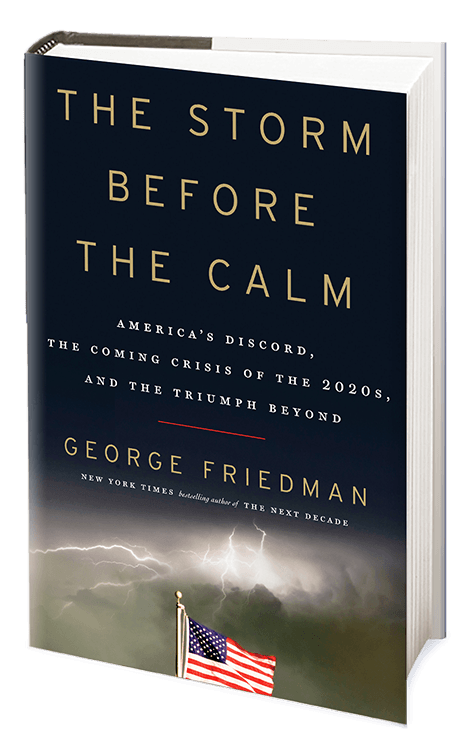
The Storm Before the Calm

The Storm before the Calm“Who will win the acrimonious 2020 presidential election? Shockingly, it won’t actually matter that much, argues renowned geopolitical forecaster George Friedman. America, he contends, is governed less by leaders and legislation and more by cyclical forces that work deep within the nation’s unique structure.”
Lone Star Literary Life

Daily Memo: On US Drones and Strikes on Iran

Mass production. The Pentagon wants to mass-produce a low-cost one-way attack drone that the U.S. has been using in the Iran conflict, the Wall...

Media / Interviews

US Bargaining With China and Russia

With the arrival of the second Trump administration, great power competition is at an inflection point. Both Russia and China face internal crises that compel them to engage with the United States. To increase their leverage, Beijing and Moscow are attempting to coordinate their efforts. However, their ability to support each other is severely limited, giving the U.S. considerable room to maneuver. In recent days, the leaders of the world’s three great powers have engaged in a flurry of diplomacy. A few days before his inauguration, Donald Trump and Chinese President Xi Jinping held a phone call that both sides described as positive. Then, hours after taking the oath of office, Trump told reporters that Russian President Vladimir Putin was “destroying Russia by not making a deal [on Ukraine]” and that Russia was “in big trouble” given the state of its economy. Finally, on Jan. 22, Putin held a 95-minute video call with Xi, during which they discussed their interactions with the new Trump administration. World leaders are typically quick to engage any new administration in Washington, although it’s uncommon for these interactions to occur even before the inauguration. However, this moment is different for two key reasons. First, Trump’s political comeback heralds a campaign to reshape the U.S. political system and overhaul U.S. foreign policy. Second, the world is beset by a level of crisis not seen since World War II. The United States is managing two wars – in Europe and the Middle East – while confronting the potential for a third in East Asia. China’s economy is in steep decline, forcing Beijing to focus on stabilization. And Russia needs a resolution to its extremely costly war against Ukraine. In essence, all three powers are under immense pressure to deescalate and stabilize their geopolitical positions. The common thread for China and Russia is that they both need to make a deal with the U.S. to solve their respective crises. Each recognizes the limits of what the other can do to help. Beijing is not in a position to aid Moscow’s war effort in Ukraine, while the Kremlin cannot help the Chinese Communist Party fix its economic problems – which are increasingly becoming political in nature. Both see their best paths forward as reaching agreements with Washington. Russia hopes to leverage Trump’s pledge to end “forever wars” and his proclivity for dealmaking to retain as much Ukrainian territory as possible after nearly three years of conflict. Similarly, Xi hopes to convince Trump to offer some relief from U.S. restrictions on trade, technology and investment, which could help stabilize China’s faltering economy. Though in some ways the second Trump administration presents opportunities for both China and Russia, Trump’s unpredictability and the looming threat of punitive measures mean that bargaining will be difficult, to say the least. This uncertainty was underscored by Sergei Ryabkov, the Kremlin’s top official for arms control and relations with the U.S., who warned on Jan. 22 that the window for a deal is narrow and that Moscow lacks clarity on Washington’s intentions. Similarly, Chinese Vice President Han Zheng acknowledged after meeting with his U.S. counterpart, JD Vance, that while there is potential for cooperation, significant disagreements remain. The lengthy video call between Xi and Putin signals a recognition of their shared reality. The leaders are said to have compared notes on how they see the U.S. behaving in this new era. But setting aside their tireless rhetoric about their strong bilateral friendship, both leaders are wary that a deal between one of them and Washington could harm the other’s interests. Therefore, in addition to coordination, their call was also intended to assess how far the other was willing to compromise. From the U.S. perspective, negotiations with Russia have a clearer path, given Washington’s interest in ending the Russia-Ukraine war. The key question is how much of Ukraine’s territory Washington is willing to let Moscow retain in a ceasefire. Talks with China are far less straightforward due to the complexities of the geoeconomic relationship. In both cases, however, Washington holds significant leverage, knowing that both Beijing and Moscow have no choice but to engage.


Free Special Report

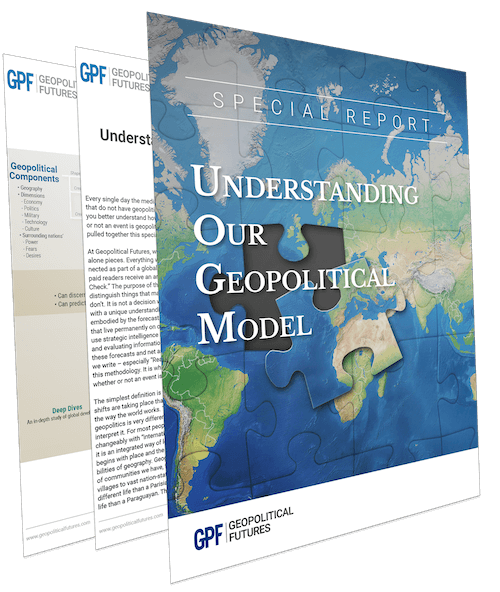
Understanding Our Geopolitical Model

Learn how we predict the outcome of changes that can significantly impact global reality.
Sign up today and receive this Special Report and join our newsletter

Latest Video

Weekly Graphic

Latest Podcasts

Trending Content

Daily Memo: US Eases Russian Oil Sanctions

Temporary relief. The United States decided to temporarily lift sanctions on Russian oil currently at sea to ease the economic fallout of the war...

Iran’s Doctrine of Protracted War

The war between Iran and the U.S.-Israeli coalition is unlikely to produce a rapid or decisive outcome. Rather than a short campaign defined by...

Daily Memo: US Deployment, Kurdish Concerns

Reinforcement. The United States will send up to 500 troops to Romania to support the U.S. operation in Iran. The Romanian parliament on Wednesday...

The Battle for Lebanon’s Future

FREE
As war rages in the Middle East, the future of Iran remains an open question. The same can be said for Lebanon, where exchanges of fire between Hezbollah and Israel have been taking place for more than a week. On this episode of Talking Geopolitics, host Christian Smith is joined by Senior Analyst Hilal Khashan for a ground-level perspective on the escalating conflict in Lebanon, and to explore the broader regional impacts of the Iran war.

Special Report:

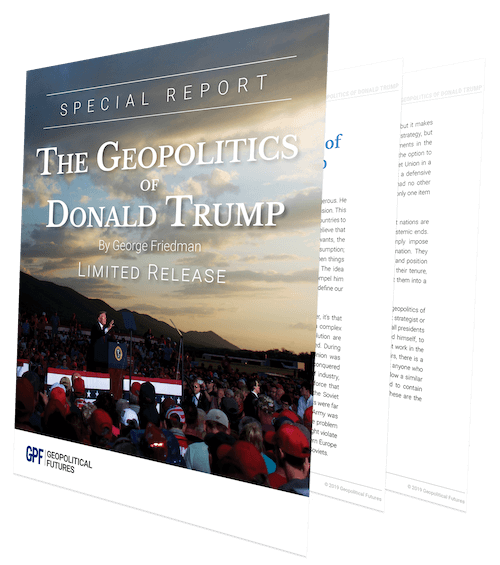
The Geopolitics of Donald Trump

“There are those who regard Donald Trump as too stupid to make decisions. There are others who regard him as a brilliant if instinctive crafter of policy. What we know of him is this. "

Forecasts

The World in 2020

The Road to 2040

We look into the future and forecast what the world…

The World in 2019

One era is ending and another will soon begin.

Read our annual or long term forecasts.

Regional Directory

[amcharts id=”map-1″]

Free Special Report

Understanding Our Geopolitical Model

Learn how we predict the outcome of changes that can significantly impact global reality.
Sign up today and receive this Special Report and join our newsletter.