
“The Next 100 Years,” which was published some 15 years ago, forecast the emergence of three significant powers over the next few decades: Japan, Poland and Turkey. Japan’s stable and growing economy and its focus on military development evince a steady, if quiet, growth in its power. Poland is now the fifth-largest economy in Europe and a Continental leader in military development. Yet both countries are constrained by major powers. Japan must contend with China, and Poland must contend with Russia, located as it is on the rear of Ukraine.
Now is Turkey’s time to shine. It has a large military and economy that, while only modestly growing, flashes the kind of potential few others in the region can. But more important, it has a massive geopolitical opportunity. With Russia bogged down in Ukraine, the United States seeking to reduce its global footprint, Iran suffering losses throughout the region that have been complicated by its internal leadership transition, and Israel reeling from crises at home and abroad, Turkey can exploit these openings in any direction in which it has fundamental interests.
In some cases, it already has. Even before Russia invaded Ukraine, Turkey played a critical role in helping Azerbaijan defeat Armenia in the 2020 Nagorno-Karabakh war, which resulted in a historic shift in the balance of power on Turkey’s eastern flank. Baku’s seizure of the territory has allowed Armenia and Azerbaijan to distance themselves from Russia and align themselves with Turkey. As important, an Azerbaijan-Armenia peace deal, which is expected to be signed soon, will facilitate Ankara’s development of the Zangezur corridor, an economic artery traversing the South Caucasus. It will also allow Turkey to connect with the trans-Caspian region and the Central Asian borderlands.
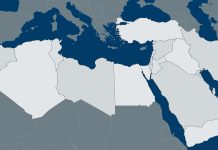
Meanwhile, Turkey has been the biggest winner in the Israel-Iran conflict. The decimation of Hezbollah’s leadership and offensive warning capabilities led to the collapse of the Assad regime. Israel’s subsequent attacks against Iran have seriously weakened the Islamic Republic. Turkey quickly capitalized on the opportunity to bring Syria into its sphere of influence, supporting one of its proxy groups to take control of the capital in Damascus. Ankara has also improved relations with major Arab states such as Saudi Arabia and the United Arab Emirates. It officially approved Egypt’s involvement in the KAAN (TF‑X) stealth fighter program, marking a pivotal step in bilateral defense cooperation, and has begun to enhance its influence in Libya to project its strength westward in the Mediterranean.
To the north, European powers are struggling to forge a new security architecture as the U.S. disengages from trans-Atlantic security guarantees. Here, too, Turkey is seizing the moment. First, it is trying to forge a closer relationship with Poland, as evidenced by Polish Prime Minister Donald Tusk’s trip to Ankara in March, to coordinate joint efforts to stabilize Ukraine and to explore Turkey’s options in postwar security frameworks. Second, as the EU and NATO are increasingly in flux, Ankara is accelerating its efforts to expand its power in the Balkans. Only recently, it launched the Balkans Peace Platform, which hosted a meeting in Istanbul with foreign ministers from Bosnia and Herzegovina, Montenegro, North Macedonia, Serbia and Kosovo, as well as a deputy minister from Albania.
Much of this is possible because of Russia. Russia’s decline, especially after its invasion of Ukraine, has implications for its southern flank, and Turkey is uniquely able to reap the benefits. In the years ahead, Moscow’s ability to project power in the Black Sea basin will wane. Already, Ankara has enhanced its naval role in the Black Sea – unilaterally and in coordination with NATO. Turkey has also positioned itself as an interlocutor between Russia and Ukraine. Similarly, it’s in the process of enhancing trade, connectivity and security ties with Georgia, Romania and Bulgaria.
In geopolitics, the emergence of a great power depends not just on having power and ambition, but also on the opportunity to pursue both. Turkey seems to fit this bill. It occupies a strategic geopolitical position astride Europe, the Middle East and the Mediterranean. That position has put pressure on Turkey for more than a century. But combined with its current military and economic capabilities, this situation has the promise to free Turkey from its constraints. Given Turkey’s domestic problems, whether it can capitalize remains to be seen.