
Eurasia

Russia’s Limited Gains From the Middle East War

The war in the Middle East and resulting restrictions on hydrocarbon supplies through the Strait of Hormuz appear to be working in Russia’s favor....

George Answers Your Questions: European Nuclear Umbrella, Risks of a United Europe

Munich Security Conference and Europe’s Future Feb. 16, 2026 Question: Although the Europeans have some nuclear capability of their own, it is utterly insufficient to dissuade...

Russo-Chinese Ties Lose Their Luster

Russo-Chinese relations seem to be doing well. Just ask their leaders. Last week, Russian President Vladimir Putin and Chinese President Xi Jinping (again) praised...

George Answers Your Questions: Comparing US Cycles

George Answers Your Questions: The Dubai Talks on the Ukraine War Jan. 31, 2026 Question: You have written about the 80-year institutional cycle and the 50-year...

Chokepoints in Space Power

Outer space isn’t as accessible as people tend to think. Some 80 nations operate or have operated satellites, but less than 15 of them...

George Answers Your Questions: The Dubai Talks on the Ukraine War

The Dubai Talks on the Ukraine War Jan. 26, 2026 Question: Will a weakened Russia drift toward the North Korean and Iranian models of instability, propped...

Daily Memo: Iran’s IRGC Set to Launch Drills

Iranian preparations. The naval forces of Iran’s Islamic Revolutionary Guard Corps will conduct live-fire exercises in the Strait of Hormuz on Feb. 1-2, amid...

The Southern Flank Unraveled: Russia’s Grip Loosens in Eurasia

A profound geopolitical realignment is unfolding at the heart of Eurasia as the influence of both Russia and Iran recedes. Moscow’s grip on its...

The Dubai Talks on the Ukraine War

FREE
Representatives from the United States, Russia and Ukraine held talks over the weekend in Dubai on ending the war in Ukraine. There’s evidence to...

The Evolution of the Collective Security Treaty Organization

Last week, Russia announced that it will soon host the International Forum for Collective Security under the auspices of the Collective Security Treaty Organization,...

Outgrowing Old Alliance Behavior

Though the Cold War is over, there are a variety of Cold War-era alliance structures that have continued to shape international relations. NATO –...

2026 Forecast: Re-anchoring the World

Global In 2025, we noted that the world was becoming more unanchored compared to years past. Since World War II, the global order had had...

George Answers Your Questions: Venezuela’s Economy and Understanding Russia

The Venezuelan Move as Preface to Cuba Jan. 5, 2026 Question: To quote your article: “ before Hugo Chavez, a leftist who took power in 1999.”...

The Shifting Focus in Eastern European Defense

Countries on NATO’s eastern frontier are rethinking defense along their eastern borders. For Poland and the Baltic states in particular, the focus has long...

The New Maritime Operating Environment

A year ago, we argued that maritime insecurity risked becoming as destabilizing as land-based conflict. Today, that warning largely holds, and in some ways...

George Answers Your Questions: The Strange Fear of Russia

The Strange Fear of Russia Dec. 29, 20205 Question: The reason for the fear of Russia is the threat of nuclear weapons. An invasion of the...

Latest Posts

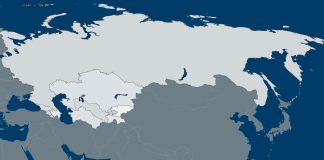
Central Asia is a highly strategic region traditionally trapped between several major powers but generally dominated by Russia, whose primary objective remains protecting the buffer zones that extend all the way to Eastern Europe.

The Russian government’s power depends on the security services, provision of economic incentives to a small group of elites and the acquiescence of the Russian population.

Ongoing regional and ethnic tensions threaten the unity of Central Asia and thus, sometimes, to the security of Russia.

Eurasia is highly exposed to Russia economically, especially when it comes to currencies, remittances and labor. Nevertheless, as the Russian economy weakens, partly due to the exporters’ crisis, its financial troubles are contributing to Central Asia’s slow destabilization.

While Russia is the dominant force, the economic slowdown in China, which is a major benefactor of much of Eurasia, is a major risk for Central Asian economies.
Regional Assessment of Russia

Regional Assessment of Central Asia

From our Forecast...

Russia will continue to conduct covert and non-military operations to take control and maintain control of its buffers.

Eurasia in our Memos

Continue to the category

More from Eurasia

Continue to the category

Latest Posts

Disrupted Oil Operations in the Persian Gulf

FREE
(click to enlarge) Though oil prices have surged since the start of fighting in the Middle East, investors are still hopeful that the war will...

Daily Memo: On US Weapons Supplies

Replenishing stocks. The Pentagon is reportedly planning to request funds from Congress to replenish munitions used against Iran. Missiles for the Patriot and THAAD...

China’s Strategic Restraint in the Iran War

Despite the outbreak of war in the Middle East, high-level U.S. and Chinese trade negotiations are proceeding as planned. U.S. Treasury Secretary Scott Bessent,...

Get Geopolitical Futures FREE newsletter

Turkey, Iran, and the Future of the Middle East — Free Report

Sign up now and receive our special report on Turkey, Iran, and the future of the Middle East.

Get weekly analysis from New York Times bestselling author George Friedman and our global team of analysts, plus special offers.

Subscription Special


The World in 2026
+
Special Collection on the Middle East

FREE with an annual subscription to Geopolitical Futures.

Subscribe Now