
Eurasia

Russia’s Escalation in the Black Sea Has Turkey on Edge

Pressure is building on Ukraine and Russia to end their nearly four-year war, setting off a scramble for leverage that is unnerving some of...

Living Through War in the Black Sea

The winter in Moscow is as dark and nasty as ever, so at the end of November, I made the 1,500-kilometer (930-mile) trip south...

The National Security Strategy of the United States of America

The White House on Dec. 5 released a 33-page document defining American national strategy. The document can be found here, and both friends and...

Kazakhstan’s Strategic Breakout: The Abraham Accords as a Route to the High Seas

Kazakhstan’s decision last month to join the Abraham Accords carries strategic implications that extend far beyond efforts to wind down the eight-decade conflict between...

The Peculiar Economics of the Black Sea Borderland

In moments of geopolitical transition, borderlands are often the harbingers of new economic orders. They are areas of inherent tension because they mark the...

George Answers Your Questions: On the 28-Point Plan to Resolve Ukraine

On the 28-Point Plan to Resolve Ukraine Nov. 24, 2025 Question: Where does Belarus figure in all of this? It borders NATO in the Baltics and...

On the 28-Point Plan to Resolve Ukraine

Any discussion on resolving the war in Ukraine must begin with two fundamental realities: Russia is unable to achieve its military objective to defeat...

On the Global Gen Z Protests

Over the past few months, a wave of protests led by members of Generation Z has swept over the world. They have largely taken...

George Answers Your Questions: Russia’s Vast Borders, US Intelligence on Drug Smuggling

Russia’s Issues Beyond Ukraine Nov. 11, 2025 Question: Why do you conclude with the statement that Russia has neither the ability nor interest to act on...

A New Map of the Arctic

U.S. lawmakers are reportedly moving this week to formally establish a senior diplomatic role known as ambassador-at-large for Arctic affairs – a position created...

Russia’s Issues Beyond Ukraine

FREE
Last week, U.S. President Donald Trump met in Washington with the leaders of Kazakhstan, Tajikistan, Kyrgyzstan, Turkmenistan and Uzbekistan – all former members of...

Russia’s New War of Attrition

FREE
A battle is raging in Pokrovsk, located in the eastern Ukrainian region of Donetsk. It is part of Russia's attempt to encircle Ukrainian forces...

Why Washington’s Adversaries Must Find Accommodation

China, Russia and Iran have certain geopolitical imperatives they can’t achieve without first reaching some kind of accommodation with the United States. Beijing needs...

In Germany, an Industrial Strategy in Disguise

At the end of October, Germany’s Federal Statistical Office reported that the economy flatlined in the third quarter of 2025. Growth for the year...

Why Russia Could Withstand New Sanctions

On Oct. 22, the U.S. Treasury Department's Office of Foreign Assets Control imposed sanctions against Russian companies Rosneft and Lukoil, as well as several...

George Answers Your Questions: The United States, Venezuela, Cuba and the Caribbean

First, I must apologize for an error in last week’s piece. The Florida Straits are not the only exit from the Gulf of Mexico....

Latest Posts

Central Asia is a highly strategic region traditionally trapped between several major powers but generally dominated by Russia, whose primary objective remains protecting the buffer zones that extend all the way to Eastern Europe.

The Russian government’s power depends on the security services, provision of economic incentives to a small group of elites and the acquiescence of the Russian population.

Ongoing regional and ethnic tensions threaten the unity of Central Asia and thus, sometimes, to the security of Russia.

Eurasia is highly exposed to Russia economically, especially when it comes to currencies, remittances and labor. Nevertheless, as the Russian economy weakens, partly due to the exporters’ crisis, its financial troubles are contributing to Central Asia’s slow destabilization.

While Russia is the dominant force, the economic slowdown in China, which is a major benefactor of much of Eurasia, is a major risk for Central Asian economies.

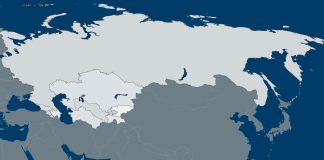
Regional Assessment of Russia

Regional Assessment of Central Asia

Required Reads: Eurasia

From our Forecast...

Russia will continue to conduct covert and non-military operations to take control and maintain control of its buffers.

Eurasia in our Memos

Continue to the category

More from Eurasia

Continue to the category

Latest Posts

No Strategy Lasts Forever

The 2025 U.S. National Security Strategy carries far-reaching consequences for countries that, over the past eight decades, have labored to persuade successive American administrations...

Daily Memo: US Plans for Venezuela, Russian Frozen Assets in Europe

Escalation. U.S. President Donald Trump ordered a “total and complete blockade” of sanctioned oil tankers traveling to and from Venezuela, a week after the...

The Trouble With Tankers

For the United States, hemispheric security doesn’t just call for military dominance; it calls for the absence of anti-U.S. governments. Washington believes that by...

Get Geopolitical Futures FREE newsletter

Understanding Our Geopolitical Model

Sign up now and receive our special report Understanding our Geopolitical Model

Get weekly analysis from New York Times bestselling author George Friedman and our global team of analysts, plus special offers.

Subscription Special


The World Explained in Maps

FREE with an annual subscription to Geopolitical Futures.

Subscribe Now