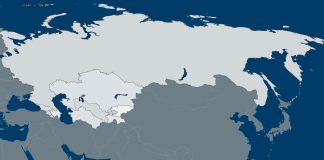

Kazakhstan: Democratization in an Era of Geopolitical Churn

Political reforms in the Central Asian giant will impact not just the region but, more importantly, Russia and China.

1033

At a time of geopolitical uncertainty across Eurasia, Kazakhstan is undergoing a political evolution. The country’s transition away from authoritarianism is a rather unique case of a former Soviet state trying to balance between the conflicting imperatives of maintaining continuity and meeting demands for change. The outcome of its democratization experiment will have profound implications […]

This article is for subscribers only

Join thousands of readers who rely on GPF for clear-eyed geopolitical analysis.

$79 per year Save 27% vs. monthly
Full access to all daily analysis & forecasts
George Friedman's geopolitical insights
2026 Forecast & Special Collection on the Middle East
100% reader-supported
Subscribe Now

30-day money-back guarantee


Already a subscriber? Log in

Kamran Bokhari
Kamran Bokhari, PhD, is a regular contributor to and former senior analyst (2015-2018) with Geopolitical Futures. Dr. Bokhari is now the Senior Director, Eurasian Security & Prosperity Portfolio at the New Lines Institute for Strategy & Policy in Washington, DC. Dr. Bokhari is also a national security and foreign policy specialist at the University of Ottawa’s Professional Development Institute. He has served as the Coordinator for Central Asia Studies at the U.S. Department of State’s Foreign Service Institute. Follow him on X (formerly Twitter) at @Kamran Bokhari