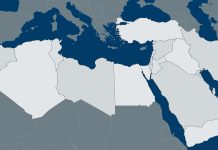

At about 9:30 a.m. local time on Saturday, the United States and Israel launched a surprise attack on Iran. It did not seem to be a surprise to Iran, which was able to carry out drone and missile attacks on U.S. bases in eight Middle Eastern nations (Israel, Jordan, Iraq, Saudi Arabia, Kuwait, Bahrain, the UAE and Qatar). In fact, it should not have been a surprise to anyone. Both the U.S. and Israel have insisted that Iran abandon its nuclear development program. Israel cannot accept the existential threat posed by a nuclear-capable Iran. Nor, as I have written before, could the United States. After extended negotiations, it became clear to both that Iran was not going to abandon that program. Whether Tehran believed it needed a nuclear weapon, or whether it simply couldn’t afford to back down from Washington is unclear and ultimately irrelevant. Tehran has said its program was meant only for civilian purposes, but given the ideology of the Iranian government, nuclear capability was unacceptable in any case. It can reasonably said that the U.S. and Israel did not believe the Iranian government.
Here is what we know so far. The U.S. has launched attacks on Iran’s nuclear infrastructure before. These bought time but clearly did not destroy Iran’s nuclear program. Crucially, yesterday’s attack did not focus on nuclear facilities. It appears to have been designed primarily as a decapitation strike – an operation meant to destroy leadership and governing infrastructure and therefore open the door to a new government. Specifically, it seems that Israel’s mission was decapitation while Washington’s seemed more bent on destroying offensive missiles and drones. Some targets appear to have been bases belonging to Hezbollah and other nonstate actors. (This was an added imperative for Israel and only mildly important to the U.S.) Others belonged to the Islamic Revolutionary Guard Corps, a military force based on Islamist ideology and a foundation of the Iranian government’s power. There were also operations carried out on the ground by Israeli intelligence that appear to have been intended to destroy some of the Iranian missile and drone capability and to identify the location of key government officials. Reports have also surfaced, including in Iranian state media, that Supreme Leader Ayatollah Ali Khamenei was killed.
More will come to light, of course, but it seems clear to me that the purpose of the attack was regime change. Regime change is not easy. Destroying a government requires more than random assassinations; it requires the destruction of the physical infrastructure of how a government functions – office buildings, communications capabilities, computers that contain information on citizens, and so on. Decapitation and regime change require disabling the government from functioning and, at times, permitting chaos (dangerous if the public favored the government’s ideology and policies). A new version of the old government might emerge, as could a regime even more hostile to the U.S. and Israel. What the public in Iran feels about the government is not clear to me, but if Iranians are hostile to Israel and the U.S., then the logic of regime change means that a new government must be imposed. Put simply, decapitation may not end the threat without an ongoing presence.
Under the Trump presidency, Washington has been careful to avoid long-term wars involving the presence of U.S. troops on the ground. This attack was aligned with that strategy, at least so far. The strategy seeks to avoid long-term involvement in managing and defending a defeated nation. Given these principles, a prolonged U.S. engagement in Iran is unacceptable, an Israeli-backed government is unthinkable, and there should not be a foreign military presence.
There are a few important takeaways from yesterday’s episode. Iran’s counterattack – undertaken without assistance and against U.S. partners – shows that it is isolated even in its own region. The attack on Saudi Arabia, as well as the possibility of policy-driven economic warfare from Tehran, could disrupt oil supply, demand and prices.
The most important issue is how the U.S. and Israel will try to prevent a similar regime from replacing the old one. Importantly, Iran has two armies. One is the IRGC, the other is the conventional armed forces, which were in place when the U.S.-backed shahs ruled Iran (until they were overthrown in the Iranian Revolution). The armed forces were never disbanded because they were essential to national defense. That army is less defined by Islamic ideology than the IRGC and, in fact, is sometimes hostile to the IRGC. Were Iran to evolve, it would seem likely that this army, more secular than the state, would have a major role in its governance. It survived as a secular force not because it was loved by the regime but because it was necessary. Perhaps that decreases the odds that a religious power could take control without an extended foreign military presence.
In the coming days, we will consider more closely the military response and the likely evolution in Iran and the rest of the Middle East.