
Wars can be viewed by historians later, but while they are raging and facts and lies compete for attention, it’s hard to understand what’s happening. Nevertheless, as we are living through the war in Iran, it’s worth making an attempt to understand what is happening, however confusing it might be.
As it stands now, the United States and Israel are conducting an air war that appears bent on destroying Iran’s nuclear program. Both see a nuclear weapon as dangerous to themselves, regardless of how it’s delivered. It’s unclear whether Iran can build a deliverable nuclear weapon, but even if there’s a small possibility, it could lead to catastrophic consequences.
The first U.S. attack on Iran’s nuclear development program demonstrated the importance of this objective. Having only partially succeeded, the U.S. and Israel then mounted a far broader aerial assault to bring about a second objective: to force regime change or, failing that, inflict enough damage to elongate the recovery time, during which perhaps a more prudent government might emerge. One of the factors that caused the Trump administration to believe that regime change might be possible was the anti-regime demonstrations that had filled the streets and resulted in many deaths. This made regime change appear a possible outcome of a military attack. Regime change was not an end in itself but a means to ending Iran’s nuclear program (as the primary goal) and creating an Iran that would be less destabilizing to the region.
A new supreme leader has since been appointed to head the government, of the same demeanor as the last one. But he is perhaps less powerful because he seems to be sharing decision-making with the head of the Supreme National Security Council and does not seem to have full control over Iran’s primary military force, the Islamic Revolutionary Guard Corps.
Given the destruction of much of the governing system, including its leadership, and national infrastructure – meaning, a loss of command and control and a semi-functional government – it seems as though the IRGC is executing operations under decisions made by its own commanders by default, perhaps according to its own preference. This is evident in the fact that the Iranian president – considered weak because he is a reformist – apologized to countries in the region that were attacked by drones and missiles in the opening stages of the conflict. It seems likely that the IRGC acted as a military force without political guidance, striking long and deep at all threats. At this point, there is likely a process underway to bring the IRGC under the new government’s control, even as the new government tries to figure out its strategy and goals, beyond survival. This is not to say that the IRGC has gone rogue, but simply that the first strike left it playing the roles of both military force and decision-maker, and the government’s apologies were designed to limit the degree to which the attacked nations would join the Western-led hostilities.
It follows from this that the primary goal of the U.S and Israel is to cripple or systematically destroy the IRGC before the new government becomes effective. Destroying the IRGC would make the new government militarily impotent before it consolidates power, putting it in a vulnerable and even desperate situation.
The IRGC is a well-armed and trained organization with both ground forces and sophisticated weapons, including drones and missiles. It is widely dispersed throughout Iran, where it is responsible for internal security as well as conventional ground warfare. It’s unclear how widely the group’s drone and missile systems are dispersed, but it is clear that those systems would need to be resupplied with new weapons from storage areas. It follows, then, that the primary mission for the U.S. and Israel is to identify the logistical system supplying these dispersed forces and destroy them. We can assume, too, that these logistics networks are identifiable by satellite, immobile and located far from major population centers. This means that, in theory, much of the combat between U.S. and Israeli forces on one hand and the IRGC on the other would take place in remote locations, rather than in cities. Notably, only a few Western aircraft have been shot down, which means either that Iranian air defense systems are ineffective or destroyed, or that the information coming out of Iran is limited.
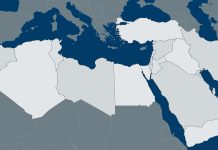
There is, of course, another vital dimension to this war: oil. Iran is a major source of oil for the world, but it is not the only source. In the long run, it is likely that the IRGC will be crippled and that other oil producers will increase production, or that Russian oil, under U.S. pressure now, will flow more readily. For the U.S. and Israel, this is the war’s shelf life. They need to end it before prices, particularly in the U.S., rise dramatically. From Washington’s point of view, Iran is a less important issue than the cost of living. This explains why Iran has attempted to close the Strait of Hormuz, through which nearly one quarter of the world’s oil passes. If this creates enough sensitivity to, say, energy prices, it would be a fundamental problem for the U.S. and, as such, would undermine the war effort.
The Strait of Hormuz seems to me to be the critical place where the war will be largely decided. Iran is a vast country, home to deserts and some of the world’s most rugged mountains. Sending troops into Iran to occupy it, even with limited opposition, would be difficult and tremendously expensive. A war in Iran would likely be very long and unsuccessful. Occupation is therefore unlikely to happen, especially given President Donald Trump’s prior view of ground-based extended wars. And if that’s the case, the key to the war will be the battle to keep Hormuz open as air power shatters the IRGC – something that could potentially be done in months, not decades.
Crucially, the fact that it takes a relatively long time to repair damaged oil facilities gives the IRGC another option. It has not completely halted its attacks on other oil-producing states in the region in spite of the president’s apology, and that has already, to some extent, reduced oil production in these states. Increasing production in other parts of the world can be difficult and time-consuming. All this means that if the new Iranian government is unwilling or unable to rein in the IRGC, and it intensifies attacks on regional oil facilities, what could follow would be a significant decline in global oil capability and a dramatic uptick in prices, threatening the global economy. If the IRGC is able to renew its attacks on regional oil producers, simply keeping the strait open would not by itself eliminate the threat of a global economic crisis. This leaves the U.S. and other oil consumers in an extreme economic crisis that will take time to recover from, even after production is resumed. This scenario would leave Trump facing a political crisis in the United States.
Washington, then, has three options. The first is to try to cripple the IRGC’s missile and drone capabilities quickly. The second is to create a new regime that is able and willing to take control over the IRGC. The third is to battle it out in the Strait of Hormuz. It could also pursue a combination of the three, with each facing severe challenges.
This brings us to Russia and China. Russia is less likely to act. Its army is fighting in Ukraine, and more important, it stands to benefit greatly from the destruction of oil production in the Middle East – which would give Moscow much-needed money and political leverage. China is a different story. Even though it has diversified its sources of energy, high oil prices would still hurt its economy, dependent as it still is on exports, which would be harder for foreign markets to afford. Notably, the Chinese foreign minister has condemned the attacks, even as he confirmed that Trump would meet with President Xi Jinping in late March (earlier than the original date). Given China’s exposure, and given the ongoing negotiations between Washington and Beijing, China is unlikely to provide military assistance to Iran. It, too, likely hopes someone can rein in the IRGC.
Ultimately, the consequences of the war come down to whether Tehran can or will control the IRGC, or whether the U.S. and Israel will risk launching an even greater attack. The stakes are now getting higher globally, with the most likely option being that the U.S. will destroy the IRGC.
From a military standpoint, the fundamental question is whether these goals can be reached primarily from manned and unmanned air power, given that a ground war would likely be long and costly in terms of both lives and money, due to Iran’s size. If airstrikes cannot achieve the goal, the unknown is whether in the end the U.S. would follow with a ground war, which has been since World War II very costly and in many cases a failure.