
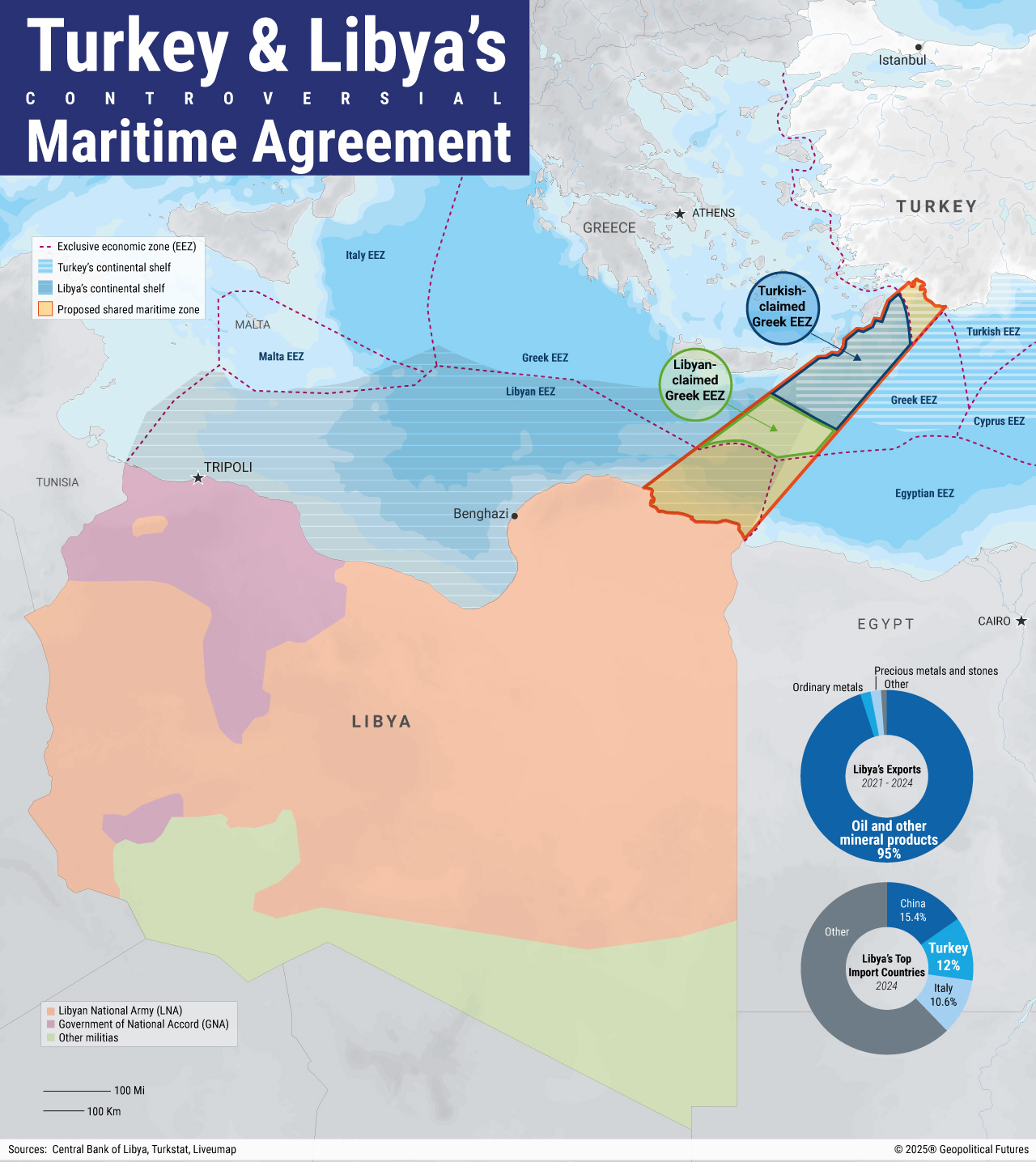
Libya’s eastern parliament is preparing to vote on ratifying a maritime deal that its rivals in western Libya signed with Turkey in 2019. Legal challenges in both eastern and western Libya initially blocked the agreement, while Greece and Egypt countered in 2020 with their own pact. Cyprus, Egypt and Greece reject the deal, saying it ignores Greek islands. But eastern Libyan lawmakers are now reconsidering, putting the deal back in play.
Approval would strengthen Turkey’s attempt to break what it calls a Greek island blockade, give Ankara political cover to survey and drill for gas in a contested corridor and justify a long-term Turkish naval presence in the central Mediterranean. For eastern Libya, the deal promises investment and political leverage.
If passed, the deal would allow Turkey to claim rights in waters south of Crete, overlapping with the 2020 Greece-Egypt EEZ accord. Since Turkey is not a party to the United Nations Convention on the Law of the Sea, no neutral arbitration exists. The dispute will instead play out through naval patrols and diplomatic pushback. Ratification would not settle boundaries but harden them, raising Turkey’s profile in eastern Mediterranean energy politics while increasing the risk of confrontation.