

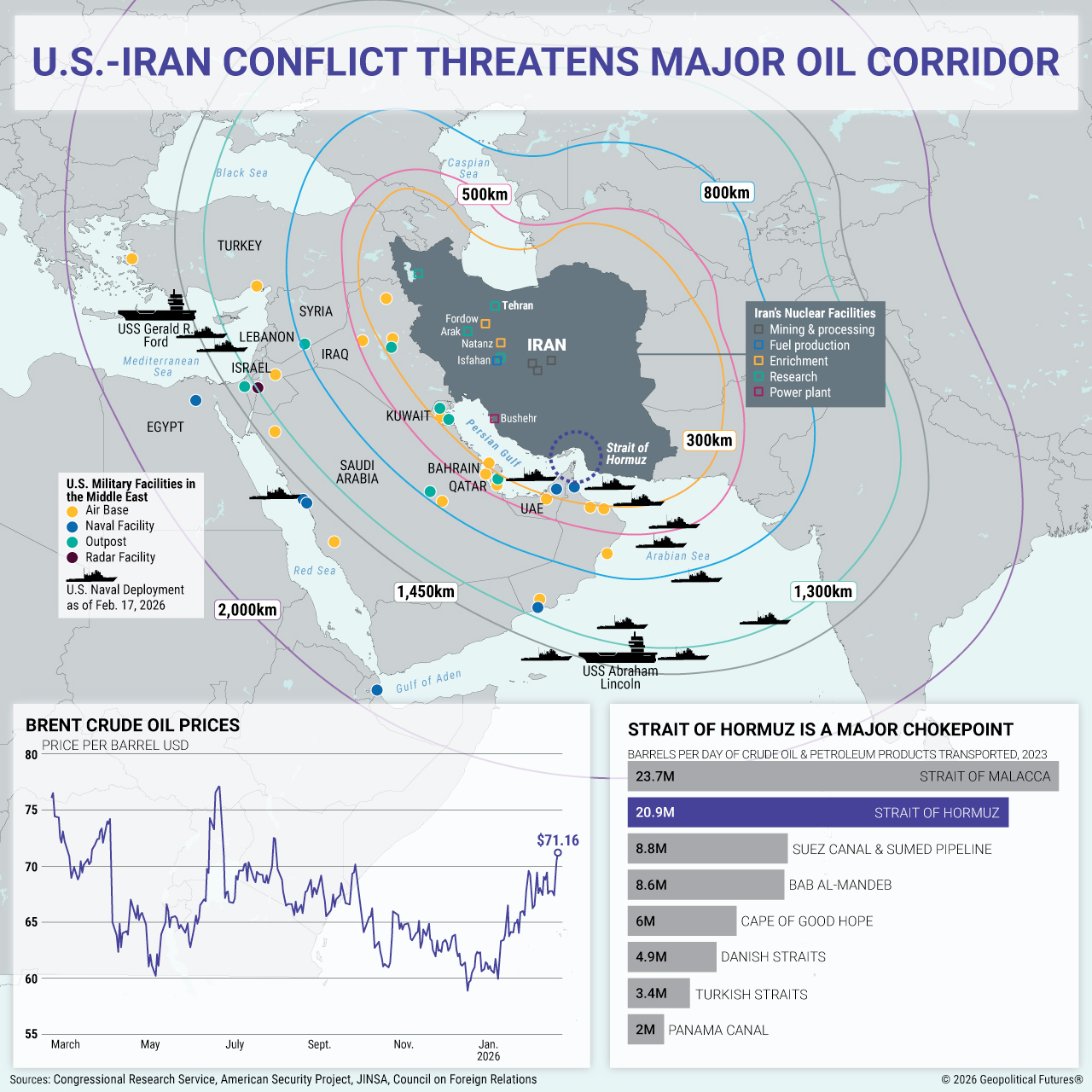
Brent crude prices have risen modestly in recent weeks, climbing into the low $70s after several months of relative stability. The move has coincided with growing concern that tensions between the United States and Iran could escalate into a broader military confrontation. While the price increase remains limited, it highlights how sensitive energy markets are to developments in the Persian Gulf. The region sits at the center of global oil transport. Roughly one-fifth of global oil consumption passes through the Strait of Hormuz, the narrow waterway linking Gulf producers with global markets. Any threat to shipping through this corridor quickly raises concerns about potential supply disruptions.
Iran’s missile capabilities help explain why tensions in the Gulf quickly draw attention in energy markets. Much of the region’s energy infrastructure, including export terminals and tanker routes (as well as several U.S. military installations), falls within range of Iranian short- and medium-range ballistic missiles. In a conflict, these systems could threaten shipping or strike regional facilities, slowing the movement of oil out of the Gulf. Iran has repeatedly threatened to disrupt shipping through the Strait of Hormuz, which is why tensions involving Tehran often ripple through energy markets.
Yet the existence of these capabilities does not automatically push prices higher. Brent crude has traded within a relatively narrow range over the past year, suggesting traders still expect tensions to remain contained. U.S. forces stationed around the Gulf also shape these expectations. Naval and air assets that have surged into the region are intended to defend infrastructure, deter attacks on shipping and maintain freedom of navigation. At the same time, the presence of additional strike capabilities underscores how quickly tensions could escalate if conflict were to break out. As long as markets believe large-scale disruption is unlikely, however, the impact on oil prices is likely to remain limited.