

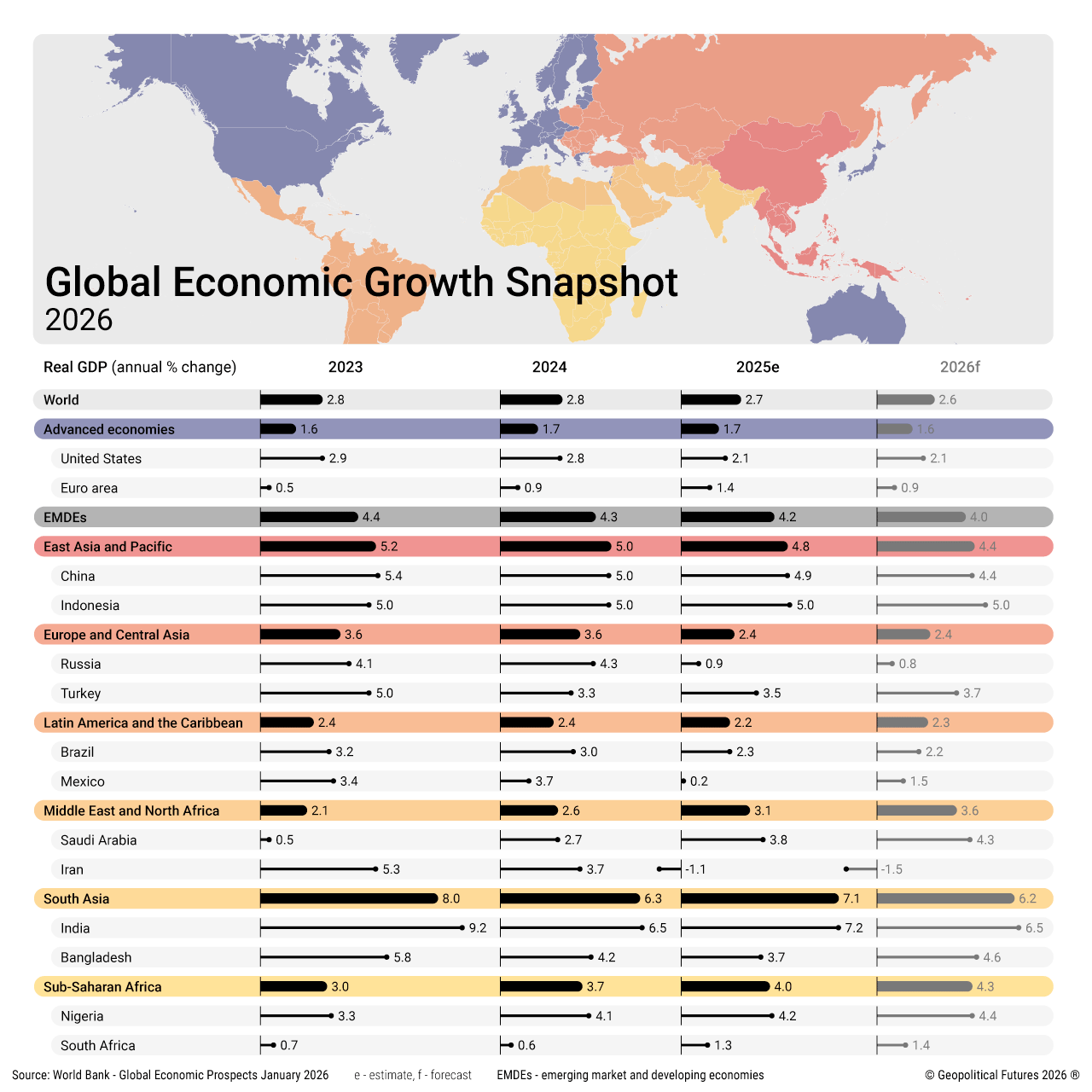
According to the World Bank’s Global Economic Prospects report, the global economy in 2025 demonstrated greater resilience than expected, given trade tensions and political uncertainty, thanks to stronger-than-expected growth in the largest economies. To some extent, the surge of trade before the U.S. tariff hikes, as well as gradual monetary easing, supported economic activity.
However, the World Bank does not see this hopeful trend continuing in 2026. As the favorable factors supporting the largest economies fade, the lagging impact of new trade barriers will come to the fore. This points to a continuation of trade tensions and policy uncertainty, leading the World Bank to forecast a decline in the rate of real GDP growth in several regions and economies.
The bad news isn’t universal. For example, economies in the Middle East, such as Saudi Arabia, may experience higher growth. But the World Bank also cautions that slower growth in major economies will put pressure on demand for energy and industrial goods, negatively impacting commodity markets and the economies of developing countries that depend on exports of these resources and goods.