

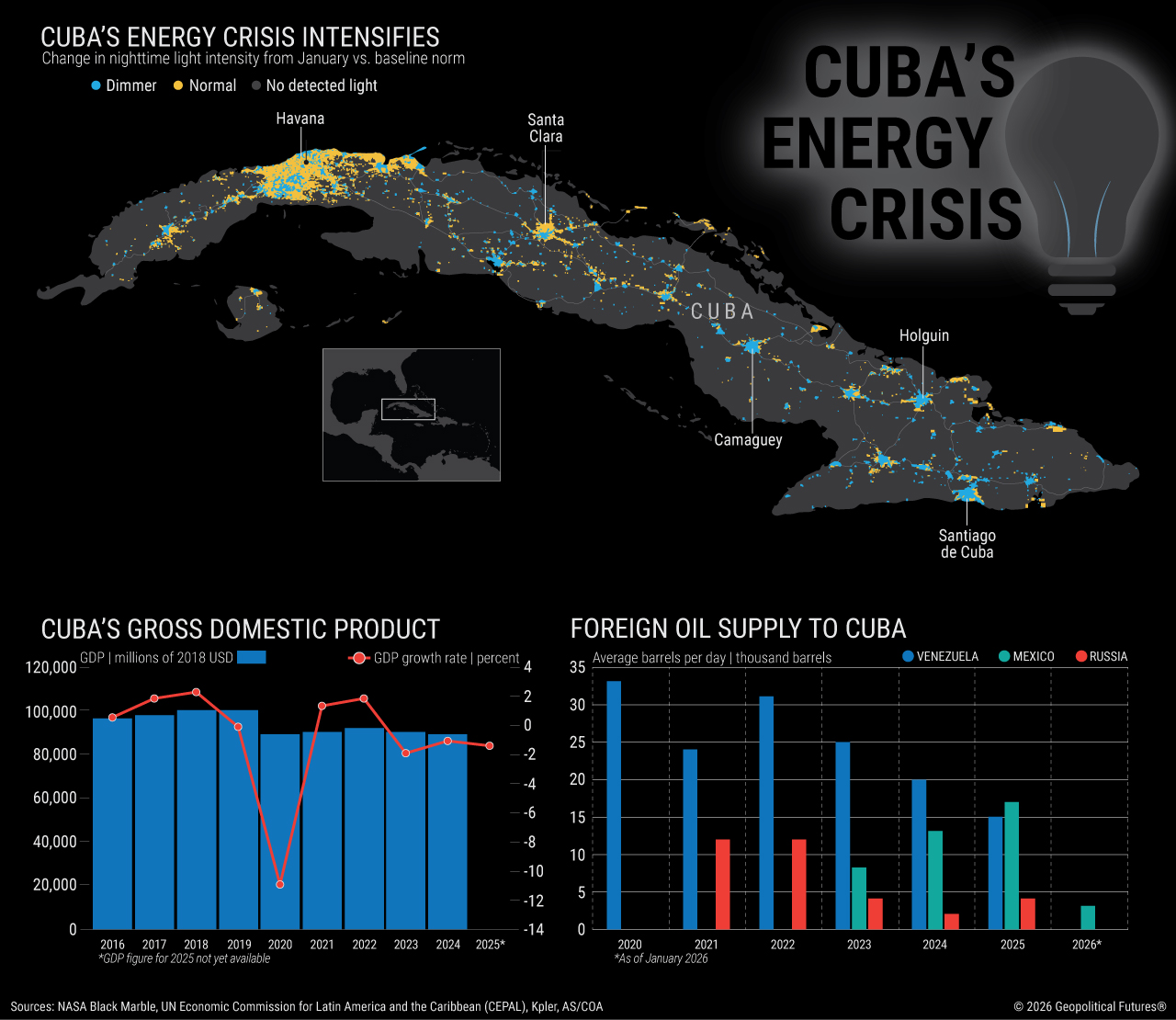
Cuba’s energy crisis has been going on for years but is now taking on a geopolitical dimension. The country’s electricity infrastructure has two major vulnerabilities: fuel supply and physical maintenance. Since the U.S. deposed Venezuelan President Nicolas Maduro in early January, Cuba has stopped receiving oil supplies from Caracas. Only Mexico and Russia have ventured to step in and provide Havana with oil, as maintaining influence on the island serves their respective national interests. Unsurprisingly, this creates tension with the United States. Cuba’s dilapidated electrical system also factors into the frequent, large-scale power outages experienced on the island.
Small groups of people have now started taking to the streets, demanding the government improve living conditions. Washington has an interest in supporting such political unrest, as it creates additional pressure on the Cuban government, which is currently in negotiations with the U.S. over the future of their bilateral relationship.