
In the assessment of U.S. Director of National Intelligence Tulsi Gabbard on March 18, three weeks of sustained bombardment by U.S. and Israeli forces have left an “intact but largely degraded” regime in Iran. That same day, Israeli Defense Minister Israel Katz shed light on how his government, at least, planned to further this degradation. So far this week, the head of Iran’s Supreme National Security Council, its minister of intelligence and security, and the commander of the Revolutionary Guard’s paramilitary volunteer militia have died in targeted airstrikes. The decapitation attacks will continue, according to Katz, who said Prime Minister Benjamin Netanyahu had preauthorized the targeting of more senior Iranian officials. As a strategy, the strikes will not bring about the sudden collapse of the Islamic Republic, but they will disrupt its functioning and likely its cohesion – potentially to the detriment of a negotiated solution.
Decapitation has proved highly effective against major Islamist insurgent networks in the post-9/11 era, including al-Qaida, the Islamic State, Hamas and Hezbollah, but the Islamic Republic is a nearly half-century-old state actor that governs more than 90 million people in a territory larger than France, Germany, the United Kingdom and Italy combined. In highly institutionalized states, the bureaucratic and security apparatus can often absorb the loss of top figures, maintaining continuity of operations and decision-making even under extreme pressure. Conversely, in systems where authority is highly personalized, the removal of key individuals can trigger disruption, paralysis or infighting. Iran tends toward the former but contains elements of the latter. Understanding this balance between personal authority and institutional resilience is essential to assessing how sustained attrition of leadership might shape the Islamic Republic’s capacity to govern, project power and respond strategically over time.
Of this week’s targeted killings, Ali Larijani’s is the most consequential. The 67-year-old led the Supreme National Security Council, which encompasses representatives from all of Iran’s major factions and power centers. Larijani was a central node in the regime’s power network; as the son of a prominent grand ayatollah, he enjoyed significant influence among the clergy, while his status as a former officer of the Islamic Revolutionary Guard Corps granted him authority with the military. Shortly before former Supreme Leader Ayatollah Ali Khamenei’s assassination in the initial U.S.-Israeli attacks on Feb. 28, Larijani was tapped to manage the state’s affairs in the event of Khamenei’s death, until a new supreme leader could be chosen. With Khamenei’s successor, his son Mojtaba Khamenei, wounded and his status unclear, and the president holding limited legal authority and also lacking influence in the regime, Larijani’s absence leaves the regime without a unifying figure capable of coordinating the security apparatus and mediating between competing camps within the political elite.
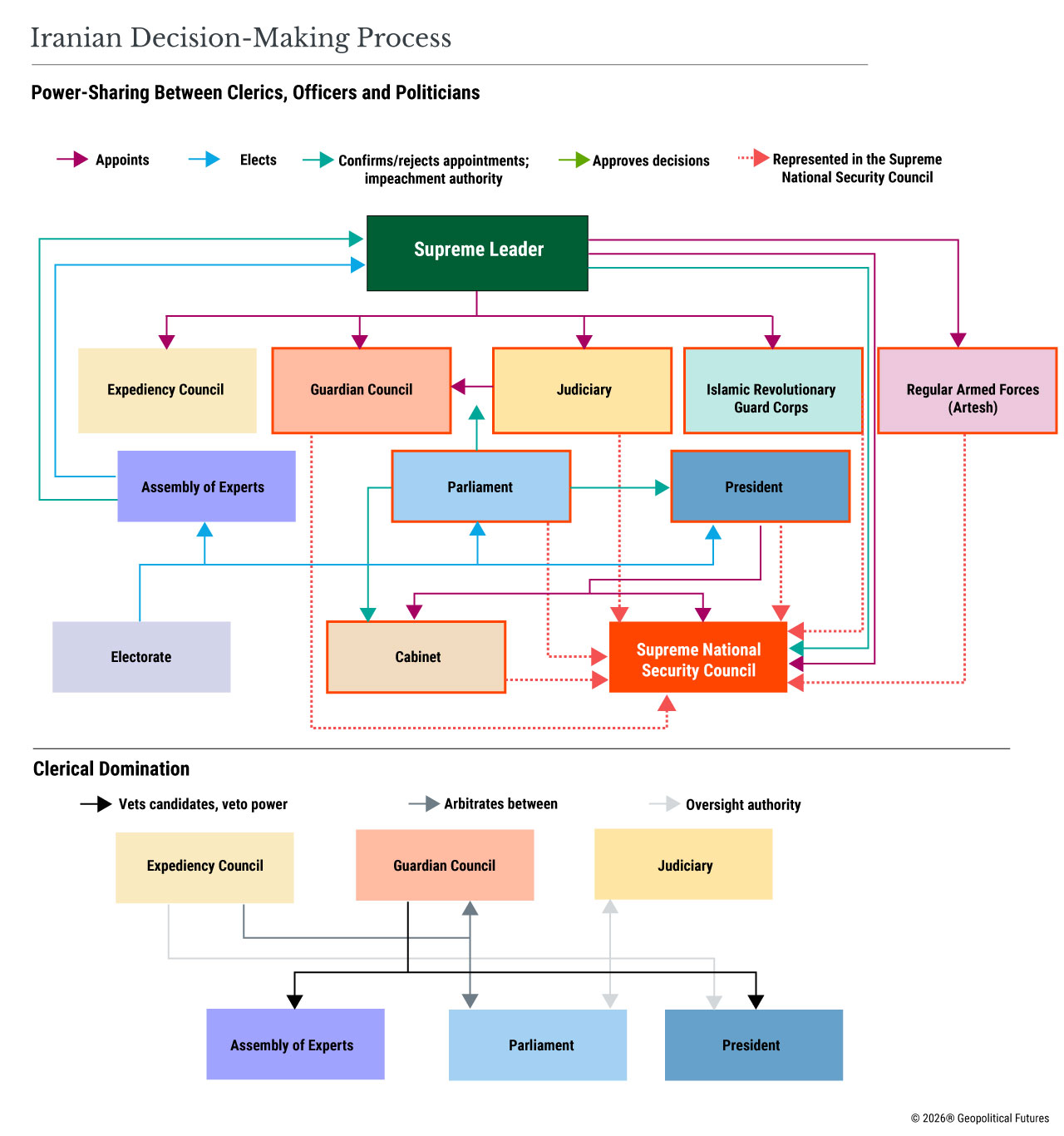
In the near term, this could complicate Washington’s strategy. While Israel’s focus is on maximum disruption – dismantling as much of the regime’s institutional and coercive infrastructure as possible to limit Tehran’s capacity for retaliation and long-term regional influence – the U.S. is trying to strike a careful balance. Washington aims to weaken the regime selectively, applying enough pressure to compel compliance on critical issues (nuclear enrichment, ballistic missile development and proxy activity) without provoking a full-scale collapse that could destabilize the region. This requires Washington to balance the pace and intensity of strikes to degrade the regime while preserving enough institutional cohesion to keep it in a position to negotiate or be coerced diplomatically. If, however, decision-makers in Tehran are distracted with political squabbling or struggles enforcing the military chain of command as a result of the decapitation strikes, then reaching the internal consensus necessary to strike a bargain with Washington will be difficult. U.S. President Donald Trump suggested as much on March 16 when he told reporters: “All of their leaders are dead. … We don’t know who we’re dealing with.”
For Iran, another challenge could arise later, particularly when active hostilities have ceased. Should Iranians return to the streets to protest – whether over the regime’s policies that led to the war, the state of the economy or any number of other factors – Tehran could struggle to coordinate a rapid and disciplined response. The elimination of Basij commander Brig. Gen. Gholamreza Soleimani, along with several other senior leadership figures, is especially significant here. An all-volunteer paramilitary force led by an IRGC general, the Basij has been the regime’s principal instrument for suppressing mass unrest since the 2009 Green Movement protests. Its effectiveness depends heavily on a centralized chain of command linking it to the IRGC – a chain that may need to be rebuilt when the war is over.
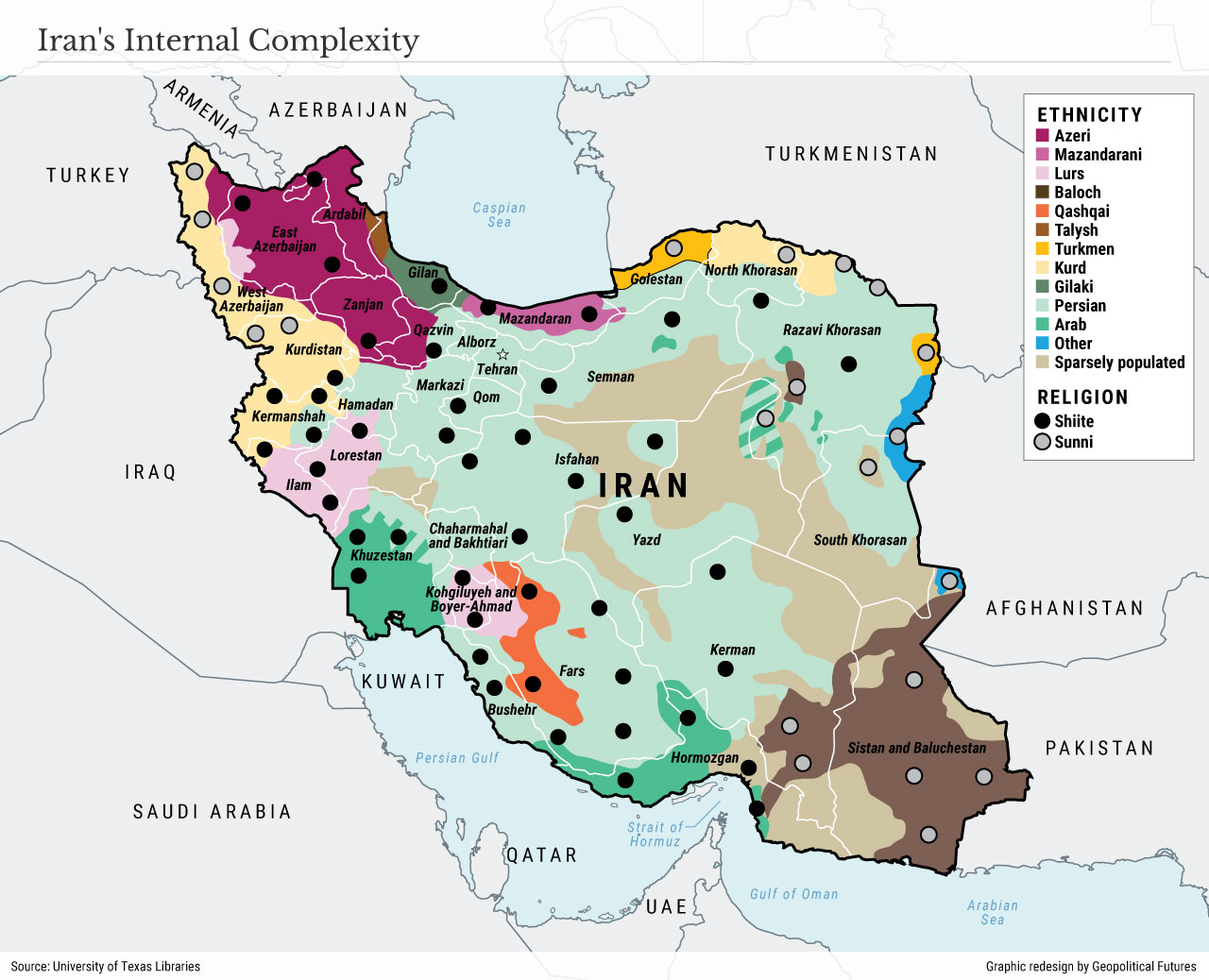
None of this is to suggest that the Islamic Republic will not survive, but there are lingering questions about the form it will take once active hostilities subside. The combined loss of central figures including Larijani and Soleimani strikes at both the decision-making nucleus and the internal security apparatus, testing the regime’s capacity to maintain cohesion and control. While the IRGC and Basij retain structural depth, the tempo and precision of the U.S.-Israeli campaign raise the probability of protracted disruption, creating a window in which factional tensions and public unrest could intensify. Ultimately, the future shape of the regime will hinge on the interplay between personal authority and institutional resilience, and whether the remaining leadership can preserve functional command across both political and coercive domains.