
Episode Transcript
Christian Smith: Hello, and welcome to this podcast from Geopolitical Futures. I’m Christian Smith. A week can be a long time in geopolitics. Cast your mind back a week. And Donald Trump was posting that a whole civilization will die tonight. Fast forward to now, and a tenuous ceasefire has been agreed. Negotiations have taken place, and the US has begun a blockade of Iranian ports. But with Iran yet to agree to give up its enriched uranium, the Strait of Hormuz mostly still closed, and the war in Lebanon continuing, how much closer are we actually to an end to all this, and have we actually avoided economic disaster, or is it still coming down the track? Well, on this episode of the podcast, we try and figure that out. And I am joined by Geopolitical Futures chairman and founder George Friedman to, to discuss where to next in the Middle East. George, hello. Welcome. We haven’t spoken, of course, since last week’s ceasefire was announced. Really, the first question I wanted to ask was, why do you think we got there in the end?
George Friedman: Well, we got there because wars have two endings. They always end, sometimes by victory, one side or other, the other time by negotiations. So as the Vietnam War ended in negotiations, World War II ended in destruction of Japan and Germany, but they ended. So all wars end one of two ways.
Christian Smith: And George, with all of that, negotiations, it seems, have already broken down.
George Friedman: So in a negotiation, there has to be one point at which one side or the other backs out, doesn’t want to do this, not going to sell the house, not going to pay that much money, so on and so forth. Okay, so negotiations, particularly important things, large corporations, these always have breakdowns that occur. And those breakdowns are ways in which to try to shape the other side’s behavior. The side that needs to deal more may make the more irrational demands, trying to compensate for the fact that they know he knows them more. So when you look at these negotiations and you think back on buying a house or corporate negotiations and so on and so forth, it would be very odd if the negotiation were two people to sit down after fighting for a while, killing each other, and reaching an agreement easily on what the end is. Given that the United States likely can’t defeat Iran, and Iran likely can’t defeat the United States, the war will end with negotiations. And therefore you will see in those negotiations a feeling this will never work. This can’t ever work. These people are so far apart, they can’t work. Well, that’s what good negotiators do. So when you look at any business deal being done, buying a house or ending a War, the same process is in place. And from the outside, it looks like this will never work. That it does.
Christian Smith: I mean, to reach for a metaphor that Trump really likes. Who do you think holds the cards now in these, if we get negotiations again, or just more broadly in the. In the conflict itself?
George Friedman: Well, the question is, how many cards do they want to hold their hand? The United States has a lot of cards. Does it really want to agree to throw those cards into the deal? The Iranians also have a number of cards, but fewer. And when they throw them into the deal, well, they might lose those cards. And on both sides, therefore, the way you approach these negotiations is by really saying, I don’t need this. I am capable of fighting forever. I will defeat you. Okay. Then you sit down and you know you’re lying. And then you start offering things. Okay. And the first offers are completely unacceptable. And was expected to be along with saying, my wife really doesn’t like this house. I kind of like it, but she doesn’t. All right, so we might say Israel, metaphorical wife doesn’t like this deal. So I’m going to walk. In a negotiation, you gain nothing by sitting down and saying, I must reach a deal. You gain power, capability, possible outcome good for both sides by refusing to accept the first offer. So the example in geopolitics is the manner in which negotiations between this. In the Vietnam War between the United States and North Vietnam took a very long time. And the war took a very long time. And at all times, the United States clearly knew that it failed to achieve its goals of Vietnam. And the North Vietnamese clearly knew that in the end, the United States would leave. But each side sat there for extended periods of times in Paris, the Paris peace talks, and bargained, and each side pretended that they could go on with this war forever. When if you sat back and took a look at this, you say, that’s ridiculous. You can’t go off with this war forever. And you’d understand which side is stronger, which side is weaker, and so on and so forth. So where do we look at it at this place? Well, the United States is militarily stronger. We have nuclear weapons. We could wipe out the whole country. We have enough troops to engage now. Is the United States government, the public, called the wife, in this case, willing to allow you to spend that much on this war? Okay. Was it really willing to let it go ahead? The Iranians, how long can they wage this war without some objection from the public who probably don’t have that much power in that country, but may have Other issues, they can’t make a peace because they might be killed if they enter into the peace by other elements of the government. So it’s a very complex situation, as most negotiations are. And the Paris peace talks took, I think, over a year before they could get to settlement. So if we think about it both from the example of Vietnam and we think about it from the example of buying a house, none of the things we’re seeing at this point, it appears that one side or the other wants to crush these negotiations because they’re saying that they’re going to make a deal. But this war cannot end in victory for either side. It’s too costly for the United States, and the Iranians are too likely to be devastated. Thus, we know the war will end at end of war, will be on negotiations. And out of all of this, for God knows how long, we’ll each be walking away from the table saying, I don’t need a deal, which is nonsense.
Christian Smith: I guess the issue with that may be different here or that some people are worried about is the Strait of Hormuz factor and the fact that that is closed, effectively, give or take, and now is closed by the US in terms of Iranian ports. I mean, in many ways, that sort of move is a reciproc move that Trump has made. So in that respect, the time factor is bigger because if you believe some predictions, the world economy is sort of teetering on the edge of crisis.
George Friedman: Well, the Iranians closed the port, expecting other nations to put tremendous pressure on the United States to end it. We saw that bet raised. We closed the ports. Now, one of the nations we’re trying to get to really help us these negotiations is China. China badly needs the oil coming through these Straits of Hormuz. China is also present through its ambassador, at the peace talks taking place in Pakistan. China is also hoping for a summit coming sometime in May, we say now, where an agreement will be reached with the United States for greater access for Chinese goods in the United States. So by raising the bet, you bet that you’re going to close the story of the moon. No, if you open it, we’ll close it, too. That was meant to signal to the Iranians that we don’t need that oil. We’ll live through $100 a barrel. But Chinese, your counter? Well, they may not be enough. And the Russians don’t have enough oil to ship to solve the problem. So if you look deep into it, the statement was basically saying, okay, you close your parts, keep them closed forever, you’re going to lose a Lot of money in the process and we won’t. Now, is Trump serious, isn’t he, that the Iranians have to read. Are the Iranians serious about this or not? This is something Trump has to read. So what he did was like in a good poker game when you have a busted flush but you still want to bluff. Okay? Not only not fold your cards, not only call the bet, raise it.
Christian Smith: That’s why I always lose poker. I mean, reading out of that is that almost. It’s now a question perhaps if this is such an issue, going to be such an issue for the Chinese that this becomes an issue of not whether the US can weather the oil storm or whether the Iranians can weather the oil storm, but whether the Chinese can
George Friedman: weather the oil storm, whether the other countries can. Now, they want, would, I assume, want to put pressure on the United States to end the war. We’d like them to put pressure on Iran to end the war. So the Iranians close the ports, the straits, in order to get the Chinese and the other nations, but more importantly to get the American public opposed to the war. The American public is experiencing Stallone calls inflation, but should be the problem of high prices, okay, affordability. And they’re betting that if they close the ports, won’t be the Chinese, it won’t be. It’d be the American public rebelling. We on the other hand, are arguing or hoping that the attacks all over Iran will cause the public itself there to want to close the war. So one of the dimensions is try to get lies on your side simply by needing it. The other dimension is try to get, get some sort of unrest in the other Kai’s country to create some sort of stress in the regime.
Christian Smith: So as, as everything really. This is. These are all just sort of moves on a chessboard, I suppose, or, or, or hands in poker. What do you, when you actually get down to it, though, when we’ve talked about this before, is it for the U.S. first of all, is it still a matter of they want to get the nuclear material out, that’s it.
George Friedman: Ideally, the United States would like a regime change in Iran. They’re not likely to get it or at least under these circumstances, but they’re quite serious about the nuclear capability. I mean, a nuclear Iran would have enormous power in the region, including the Gulf states that are massive oil producers, Saudi Arabia and so on. In other words, they would control the price of oil, oil in the world. And that’s quite a gift to give them. And when you think about that, nuclear weapons would do that at the same time might also threaten the United States. I’ve talked about the nuclear 911 and so on and so forth. So not having them have nuclear weapons, stopping them in the early stages, making sure they don’t have the material, is quite rational that the Iranians would love to have nuclear weapons because that would allow them to. So you look at this thing, this war is going on because we said we didn’t want them to have nuclear weapons. If this was a minor thing to the Iranians, they would have agreed and handed over the material. But they didn’t. So the more they fight based on that principle, the more it appears that they really do want nuclear weapons. Hence convincing the United States even more that they’ve got to stop them. Now, this doesn’t necessarily play out in media. This doesn’t necessarily what the Europeans hear or the Russians hear, or so on and so forth. But consider the fact that we were very concerned about nuclear weapons. We said, give it to us, they refused. They went to war instead. That makes the American position somewhat more credible, somewhat okay. But there are other things as well. Stabilizing regions, everything else. Plus any leader who goes to war doesn’t want to emerge as a loser. Lyndon Johnson went to war in Vietnam. He couldn’t win it left it to Nixon to negotiate an end, and he didn’t go down the history variable. Therefore, the leadership’s needs have to be taken into account.
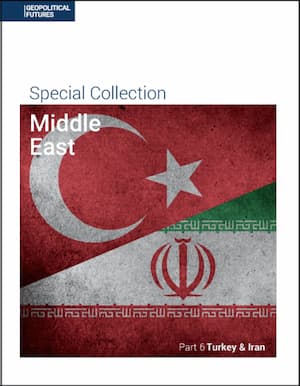
Christian Smith: Take a moment to follow and rate us on your preferred podcast platform. For video versions of the show and More, subscribe on YouTube eopoliticalfuturesgpf. Click the link in the description below for access to our free newsletter. And for a limited time, you’ll receive an instant download from our special collection on the Middle East. In this select issue, you’ll find insights on Turkey’s regional ambitions, Iran’s nuclear and ideological dilemmas, and the role these nations play in regional power dynamics before we come on to Iran. And I think that’s an interesting point, George, because you’ve written about this before on geopoliticalfutures.com about when geopolitical issues become political and they move into that realm of less about imperatives and more about leaders before we move on to Iran. I guess in the same way, America will be getting intense pressure, whether we see it or not, over the coming weeks and months. If this continues to allow for the Strait of Hormuz to be open both from its Gulf allies, from European allies, from Asian and Pacific allies who are dependent on everything coming out of there, will that be A factor that influences it.
George Friedman: Well, given stakes in war, given the stakes that the United States has undertaken, Iran has undertaken, the amount of pressure has to be more than unpleasant notes, diplomatic notes. It has to be some real pressure applied. It’s very hard to put that kind of pressure on the United States. The United States waged wars in Afghanistan and Iraq and Vietnam and so on, and other nations sent strong messages. It didn’t work. You really have to have some power. Okay. In this particular case, I think the cards on the American side, in the sense that it can withstand the pressure of other nations and rising oil prices somewhat better than these other nations can, other nations are under somewhat more pressure than the United States is economically. Therefore, since the United States is not responding to that pressure from these other countries, one of the goals is to get the pressure to be put on the Iranians to end the war. And who could put pressure on them? It would be the Chinese, if that’s possible. The Chinese have not given much support to the Iranians. They have some agreement. They have from 2001, I think, to supply various things to them, but they’re not doing that. Why are they not doing that? Because they very badly need the summit coming up with Trump on making access to exports to the US Market more possible. So the consequence of them putting pressure on the United States is one, unlikely to succeed. Second, costly to the Chinese, putting pressure on the Iranians instead is more feasible. Therefore, each side is thinking about who’s under more pressure, not just how much pressure, but how resistant they can be. So this is part of the game. I mean, and I think negotiations that are taking place in Pakistan are, in the end going to be successful in some way. And the Chinese have joined those negotiations. And certainly one of the things they’re saying in there is this is a terrible thing the Americans are doing. They were really opposed to it and also saying, you’ve got to stop this war because you’re pushing us into a corner. We can’t get the oil we need. And the American negotiator will smile and say, yup, and go on. So it’s a negotiation, but unlike a house a thousand times more complex.
Christian Smith: I mean, looking at sticking with Iran, looking at Iran, how weak do you think it is now? I mean, Trump has said that most of the conventional weapons have been destroyed. I don’t think that’s entirely accurate, but a lot of them have been. The regime, though, is still in control. It still has control of the Strait of Hormuz. It still has its nuclear material. Has it Been weakened much in these
George Friedman: talks, certainly been weakened. But their fundamental value is they’re a huge country, they have resources to build new weapons and so on and so forth. In order to destroy the regime and to take control of Iran would mean ground forces coming into a country that’s two and a half times the size of Texas. And Texas is not a small place. The problem here is not only that Trump said that he would not enter into long conventional wars after Iraq and Afghanistan, it’s also that in those kind of wars, it may be the United States is going to get bogged down again. We didn’t do very well in Iraq in that kind of war. We didn’t do well at all in Afghanistan in that kind of war. So the power of the Iranians is uncertain, but the possibility of another Iraq or Afghanistan is high. Just because the size of the country, the apparent willingness of the Iranians to fight, the fact that old fashioned weapons still kill, all of these things make that question, do we have the ability to impose our will in Iran altogether, that is to cripple it, come out victorious militarily? I doubt that’s possible without a massive ground attack. And those ground attacks frequently fail these days. Thus I would say that Iran can’t really be defeated militarily. I would also say the United States can’t be defeated militarily. Therefore, this is negotiation that comes out of this.
Christian Smith: In that case, then when we talk about pressure that China can exert, what pressure can it exert beyond saying, come on guys, wrap this up?
George Friedman: Well, two ways. First, the Iranians also have an economy. That economy is based on the sale of oil. As they lack the sale of oil, their ability to enter the international markets and purchase the things they need, not just for war, but for everyday living contracts. China has in the past tended to give various economic capabilities to the Iranians. There are very few other nations that are willing to do that with Iran. So withholding any level of exports into Iran would place the Iranian economy and even lives given food and everything else in a very dangerous place. So China, simply by refusing to give any support to Iran would create a situation that may make Iran untenable and would have to force to capitulate. So these are the big guys in the room. It’s China, the United States, to some extent Russia, but not really able logistically to get as much into Iran as they need. And so if the Iranians were to exert pressure on, if the Chinese, I should say, were willing to exert pressure on the Iranians, that might have A significant effect. Now, we are not brothers with the Chinese, but the Chinese economy really needs access to the American market because they are a significant problem. By not having that. The United States is still the largest importer of goods from China. If they lost all those, well, the United States would have a surge in prices as well, but it would be devastating. Therefore, I think the fundamental question here is who can we get to to put greater pressure on Iran and what can we use? And the answer is China, its biggest customer, as well as the biggest supplier of other resources. And if we get the Chinese to see the cost of supporting the Iranians as being higher than the cost of supporting the Americans, then there might be negotiation. So I think the fact that the Chinese ambassador has joined the negotiations as part of the negotiation process is very significant. Normally you would expect the Chinese to stay out of this, condemn the United States and try to ship as many weapons they can into the country. It’s hard to ship weapons into this country at this point. But that’s not what they’ve done. And they’ve not avoided involvement in it. They’ve involved themselves. So I don’t know what they will do in the end, but I suspect that on the whole, they care much more about their relationship with the United States than they do with their relationship with Iran. And that, I think, is what Trump is betting on.
Christian Smith: So what does Iran want then? Does it want to keep its nuclear material? Does it want to charge tariffs on the Strait of Hormuz? What do you think it wants out of this?
George Friedman: Now, its long range intention is to be a dominant force in the Middle East. It already is a major force, but to be a dominant one. The fact that the United States said this war is based on your nuclear program, on your uranium and so on, and the fact that they refuse to give that up indicates that what they want to do is, if not build a nuclear weapon, be in a position to threaten other countries in the region for that. So if you look at Iran and you look at Saudi Arabia, they would really like to have Saudi Arabia’s wealth. So they have an interest in also being very secure in that region. So if Turkey becomes stronger, they won’t threaten them. So they have various geopolitical interests in the matter. They’re willing to, to some degree, give up economic benefits for a while to gain that security. And the question is, how long can they withstand that? And so the point is that, one, neither side can win the war. Therefore, two, the sooner they reach an understanding, the better. Now, which side is able to withstand this posture better. The Iranians or the Americans? That depends on two things. How much is this hurting the American economy? Military and so on. How much is it hurting the Iranian economy? Second question is, what do the populations of these nations feel? The Iranians seem to have a very powerful regime that can be indifferent to public opinion. But most cases that’s not quite true, but this one might be. Therefore, what the Iranians are betting on is the Americans having higher oil prices, and everything else will be the one to back off. All right, so the political part is that we try to destroy the regime in Iran by bombing them, killing them. And we found out, well, this was not the powerhouse we thought it was. It was the irgc. The Iranians, I think, are trying to force Trump into a position, okay, where the American public will demand an end to the war, as in Vietnam. The problem is that Trump doesn’t have the ability to run for re election if his poll numbers really stink. It’s not going to have a political impact from negotiating position. Both have powerful hands. One, the Iranian public is not going to be a force in determining what they do. Second, Trump’s political future is determined already. That’s not going to be it. All of these complexities come into it. And therefore, the negotiating process is long and difficult and ultimately depends on the realization of both sides that the other side is not going to capitulate. And then they could just possibly negotiate some sort of credible agreement.
Christian Smith: You do wonder with Trump being Trump sometimes, that obviously there’s the midterms coming up, but perhaps if he sees those as already gone, he might just wash his hands of it all and carry on doing what he wants.
George Friedman: Trump may seem very unpleasant and irrational to many people, but the one thing he knows how to do is negotiate. And he is a good negotiator. And a good negotiator is not a pleasant person. A good negotiator is not somebody who really cares about the feelings of the other side and so on and so forth. A good negotiator is someone who is so unpredictable and capable of so much harm that he gets his way. That’s the position that Trump has taken. Now, you may dislike Trump for that, you may honor him for that, but he is taking the position. And we have to go back to the history of the United States in these wars, to Vietnam, to see the matter in which Lyndon Johnson could not negotiate an end to the war, because that would be admitting that when Kennedy started the war and he carried it on, it was a stupid idea. It took Nixon, who was not involved in that process war, to do it. So you also have to take a look at the personal characteristics, not in terms of personality and so on, but in the position they’re in. For Trump, this is his last game. He’s not going to get anything better out of it or worse out of it. Going to play the game for history. For the Iranians, they seem to have a very tight hold on the country, and that means that this war can go on for quite a while. And this is why it is necessary for outside powers to bring pressure on the side that is more given to pressure, given that they don’t want that war to continue. Now, many of the countries have condemned this war. Many of them don’t care that it’s really going on. It doesn’t bother them. But the oil issue is something that bothers everyone. And those most vulnerable of these issues, the advanced industrial countries and so on, are the ones that might bring pressure. But who will the pressure be heavier on? The United States, which under Trump could manage, he thinks, or against Iran? Therefore, we need to understand something that we don’t understand. How powerful is the regime, the irgc, in controlling the population of Iran? I do not know the answer to that question. In the United States, at what point does Trump lose so much power? That is a figurehead president. They can’t force him out of issue. I don’t think they’ll rule against him, get rid of him in some sort of talks. He’ll be there, but powerless. This was the way Lyndon Johnson was at the end of his term. So there are all these possibilities. But what has to be understood is that neither side is irrational in this. The American fear of a nuclear weapon in the hands of Iran was not irrational. The desire for the Iranians to develop a nuclear weapon was not only not irrational, but signaled by the fact that you go to war before giving up the program. So let’s never forget the nuclear element in these negotiations. Why was he doing this? One, because they wanted to be absolutely impossible to attack. Secondly, they wanted to intimidate the countries in the region. Good reasons. Now, will they stick to it, or will the United States accept the possibility of Iranian nuclear weapon put on top of some very sophisticated missiles that they had? So when you look at it that way, it becomes a more dreadful sort of equation. But remember, each side had that as the fundamental issue.
Christian Smith: Let’s put aside sort of immediate negotiations and what happens next and how this is settled and pick up really on what you were talking about. The strength of the regime. Looking at the medium term, let’s just say this current conflict crisis has ended in some way. Both sides are effectively where they are now. Perhaps Iran’s giving up its nuclear material. The Iranian regime, though, is still in control. But look at the medium term. Can the regime survive? There’s been plenty of commentary, or at least some suggesting that it won’t be able to survive, that it will in the medium term be overthrown or collapse because of economic reasons. Do you think that’s fair, George, or can we just not tell?
George Friedman: It’s possible. It’s wishful thinking. There’s no evidence. So what we saw was there were demonstrations against the civilian regime. Those demonstrations were put down like this, brutally by the Republican Guard. The Republican Guard are well distributed, dispersed, very difficult to defeat. It could be done by the United States, but only with a large number of troops on the ground, supported by drones and everything else. So can the Iranian regime survive? I think the view from the Iranian regime point of view is our most dangerous step is to capitulate or to accommodate. That would make us more vulnerable in a certain way. At this point, we’ve reached a point that even Trump would say, I’m better off being a disliked wartime president and simply giving in. But I think he’s a little weaker in that because he had run his campaign based on not getting into these wars. So every time you say one thing is a declarative sentence, you then have to have a modifier, and that’s the nature of the beast.
Christian Smith: Just to wrap up, George, we’ve talked about NATO a fair few times on this podcast. I don’t think we’ve talked about it yet in relation to Iran. I mean, Trump’s suggested, of course, that NATO allies have not been there for the US in this war. The obvious response from them is that Trump chose this war, went into it. He went into it without consultation with them. He’s also said as of this weekend that NATO allies would help in the Strait of Hormuz. I think he said, including the U.K. but the U.K. has, has since come out and said that it won’t be joining this blockade. Where is NATO left here now, then?
George Friedman: Well, NATO is not really relevant to this. So here’s the principle of NATO, which is that attack on one is the attack at all. And if that were the case, they would have to come in. They can reasonably argue that this was not an attack. Now, if a nation were being threatened by an attack, let’s say by an Iranian nuclear weapon, that could possibly threaten it, is it a Defensive position or offensive position? Did we open the war against Iran or did the fact that Iran might have a nuclear weapon simply forced us into the war? But we were fighting defensive war. So if anybody wants to sit around the table discussing this variable, you could make the case that, look, it wasn’t the kind of war where they rushed across the border into the United States, but they were preparing to, and so we took them out. It was defensive. Attack on one is attack on others. The Europeans say, now you have plenty of other opportunities. You didn’t have to have war. And we don’t want to be in. The truth of the matter is very simple. The Europeans do not want to get involved in this war because they don’t want to spend the money, the lives and everything else. The Americans got into the war, let them get out. The American response is we now understand where we are in this alliance. You’re claiming that this was not a defensive war because we did not allow nuclear weapons to take place in our country, exploding our country. So it’s a wonderful conversation, but really, truth is, the Europeans don’t want to get involved in this war. And Trump no longer wants to defend the Europeans and the Russians because they’re not a threat. But we argue that all the time.
Christian Smith: I’m sure we could. I guess the follow on question would be, and people have been arguing about this, so there’s not much point in us, in us retreading those, retreading that ourselves right now. But I guess the next point would be, do you think this will have a fundamental impact on the future of NATO, on its ability to continue as an alliance?
George Friedman: I think the alliance itself was obsolete long before. When the Russians demonstrated in Ukraine that they could not over four years occupy Ukraine. The fundamental reason that NATO existed to protect Europe from the Russians became obsolete. There is no credible Russian threat. And Poland, the easternmost nation, is a powerful military force. So in other words, the purpose of NATO was to secure Europe against Russian attack. That’s the obsolescence. And it’s been obsolete for a while. And when the United States used to start saying, they’re not helping us anywhere else, okay, that was a reasonable thing for the Europeans to do. On the other hand, why would the United States be tethered by what the Europeans feel, given the fact that the purpose of NATO has ended? Therefore, alliances exist for a reason. When the reason is dissolved, as it was for them, they die. And I think NATO is in the process of dying, at least in the sense of American participation, because the American national interest, which used to be focused on Europe’s sovereignty has shifted to other things, and the Europeans have no interest in shifting with them. So this is not a moral question, it’s simply a question of national interest. And so what is the purpose of NATO at this point?
Christian Smith: And talking of the defense of Europe, given Viktor Orban’s loss in Hungary, I think we’re likely to hear a lot more in the coming weeks and months about the future of the defence of Europe and the EU and what Orban’s loss might mean for that.
George Friedman: Orban’s defeat puts Europe in a terrible place. They blamed Orban for all the things they didn’t do, claiming that he stopped them. Now they don’t have that excuse anymore. They have to face the fact that he didn’t do those things because they didn’t want to.
Christian Smith: On that tantalizing note, we might leave that topic for another discussion, hopefully on a future podcast, but we could be here for another few hours if we open that can of worms now. George, as always, thanks very much for your time. Thank you out there for listening. We’ll be back again soon with another podcast, but until we see you again, you take care and goodbye.
George Friedman: Goodbye.
Christian Smith: You can find all of our expert geopolitical analysis@geopoliticalfutures.com.


 The World Explained in Maps