

The biggest question raised by the war in Iran is not how the conflict ends but what kind of regime ultimately emerges in Tehran. Regardless of the war’s outcome, Iran has already been structurally altered in ways that preclude a return to its prewar status quo. Changes to the regime will likely unfold over several years, and like all governments, its final form will be shaped by internal power struggles, institutional clashes and societal pressures. At the core of this process lies the decisive role of the military establishment, whose incoherence, ambitions and strategic choices will determine whether it consolidates, transforms or breaks up the future political order.
U.S. President Donald Trump received a briefing from CENTCOM Commander Adm. Brad Cooper on April 30 over plans for a “short and powerful” series of potential airstrikes to break the current negotiating deadlock, Axios reported, quoting sources familiar with the matter. The meeting, which Joint Chiefs Chairman Gen. Dan Caine also attended, took place a day after Trump spoke by phone with Russian President Vladimir Putin to discuss the wars in Ukraine and Iran. Earlier on April 28, Trump and senior officials such as Treasury Secretary Scott Bessent, Vice President JD Vance, White House chief of staff Susie Wiles, and envoys Steve Witkoff and Jared Kushner met with oil and gas executives at the White House to discuss the energy fallout from the Iran war and contingency plans for a potentially prolonged blockade. Oil prices have risen to their highest levels since 2022, with Brent crude briefly jumping nearly 7 percent to over $126 a barrel.
It’s unclear when exactly the war will end, but when it does, it will do so in accordance with one of two general scenarios. In the first, sustained military and economic pressure compels Tehran to accept a negotiated settlement that meets core U.S. demands, most notably a commitment to zero uranium enrichment on Iranian soil, in exchange for significant sanctions relief. In the second, Iran fails to generate a domestic consensus around a compromise, prompting the U.S. to escalate military action and ultimately declare an end to hostilities without a formal agreement. (Such was the case in the 1991 Gulf War.)
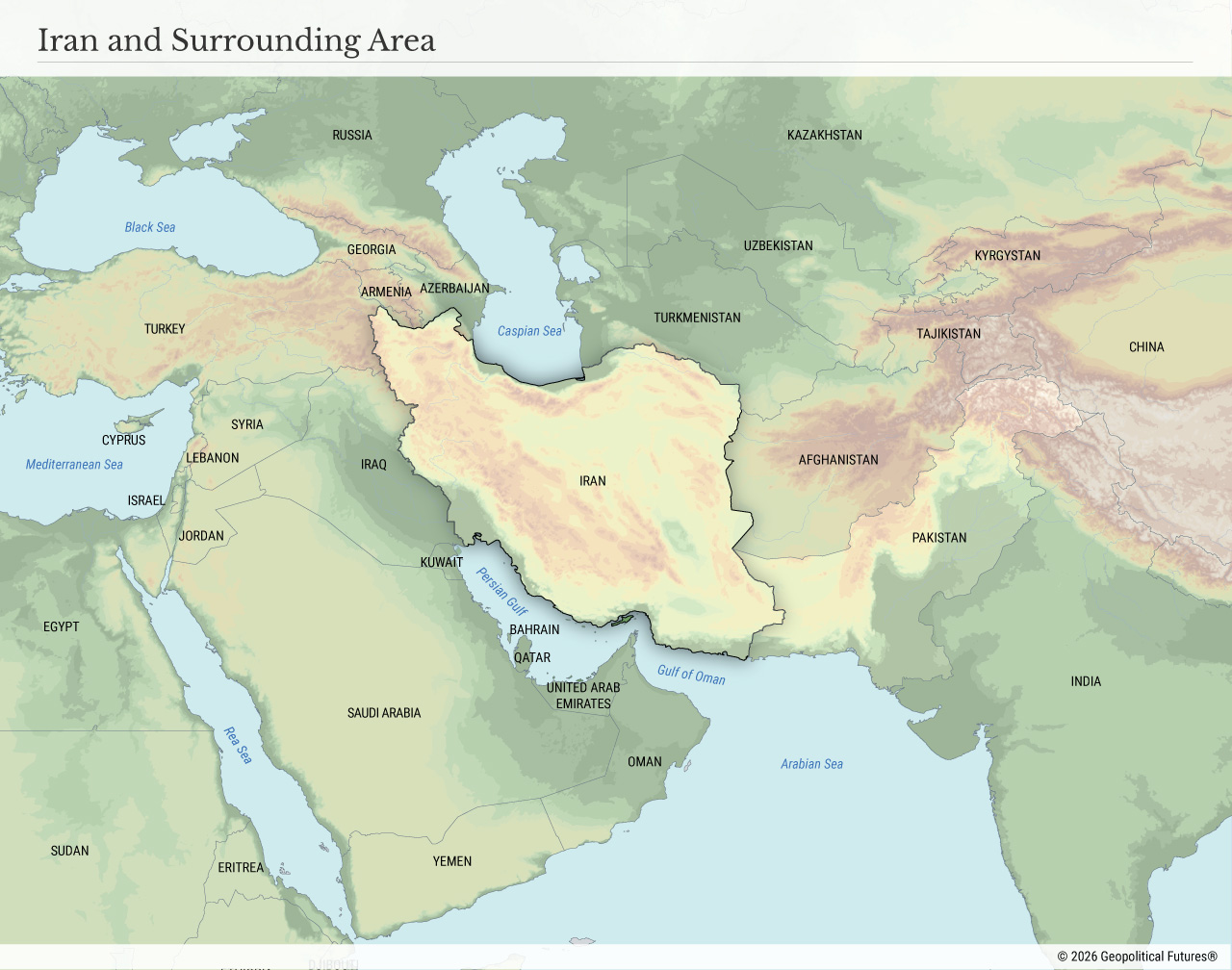
In the second scenario, the Iranian regime would emerge from the conflict significantly weakened, facing tighter postwar restrictions that would further strain already fragile political and economic conditions at home. Iranian leaders will recall how Iraq under Saddam Hussein deteriorated under prolonged containment, sanctions and isolation, all of which ultimately contributed to regime collapse. That historical precedent will weigh heavily on decision-making in Tehran, incentivizing efforts to avoid a similar trajectory of gradual erosion through stalemate and isolation. But no matter which scenario proves out, the regime is likely to enter a prolonged period of internal transformation as it attempts to stabilize and reconstitute authority under altered strategic conditions.
For now, the regime’s traditional chain of command appears broken, with authority increasingly fragmented and contested. Uncertainty over succession plans, centered as they are on Supreme Leader Ayatollah Mojtaba Khamenei, has generated competing claims and opaque reporting about leadership continuity. At the executive level, President Masoud Pezeshkian is a comparatively weak chief executive who lacks the institutional leverage of earlier administrations within the country’s power structure. In this vacuum, the Islamic Revolutionary Guard Corps, under its new leader, Brig. Gen. Ahmad Vahidi, has emerged as the principal actor shaping security, warfighting and core state decisions.
Vahidi’s emergence is complicated by the cumulative impact of Israel’s successive decapitation strikes that thinned the upper ranks of the IRGC since last June. The subsequent conflict further degraded command cohesion as repeated targeting and battlefield attrition accelerated institutional fragmentation at the top. In response, the IRGC’s adoption of a more distributed “mosaic” warfighting doctrine elevated second- and third-tier commanders into operationally and politically consequential roles, effectively broadening the number of stakeholders embedded in decision-making. This has left Vahidi with the difficult task of simultaneously reconstituting institutional coherence, integrating newly empowered field commanders into a unified chain of command and consolidating personal authority – all under the pressures of an ongoing war environment.
And if that weren’t enough, he’s doing all of this at a time when the IRGC has been materially weakened by sustained Israeli and U.S. strikes on its command nodes, air defenses and external operations infrastructure. This degradation has not supplanted the IRGC, but it has made the group more reliant on the regular armed forces known as the Artesh in warfighting efforts. Yet the Artesh’s expanded operational relevance has not translated into institutional parity because it still lacks independent strategic command channels and remains structurally subordinate in national security decision-making. The net effect is an interdependence in which IRGC authority remains but is exercised through tighter operational fusion with the Artesh.
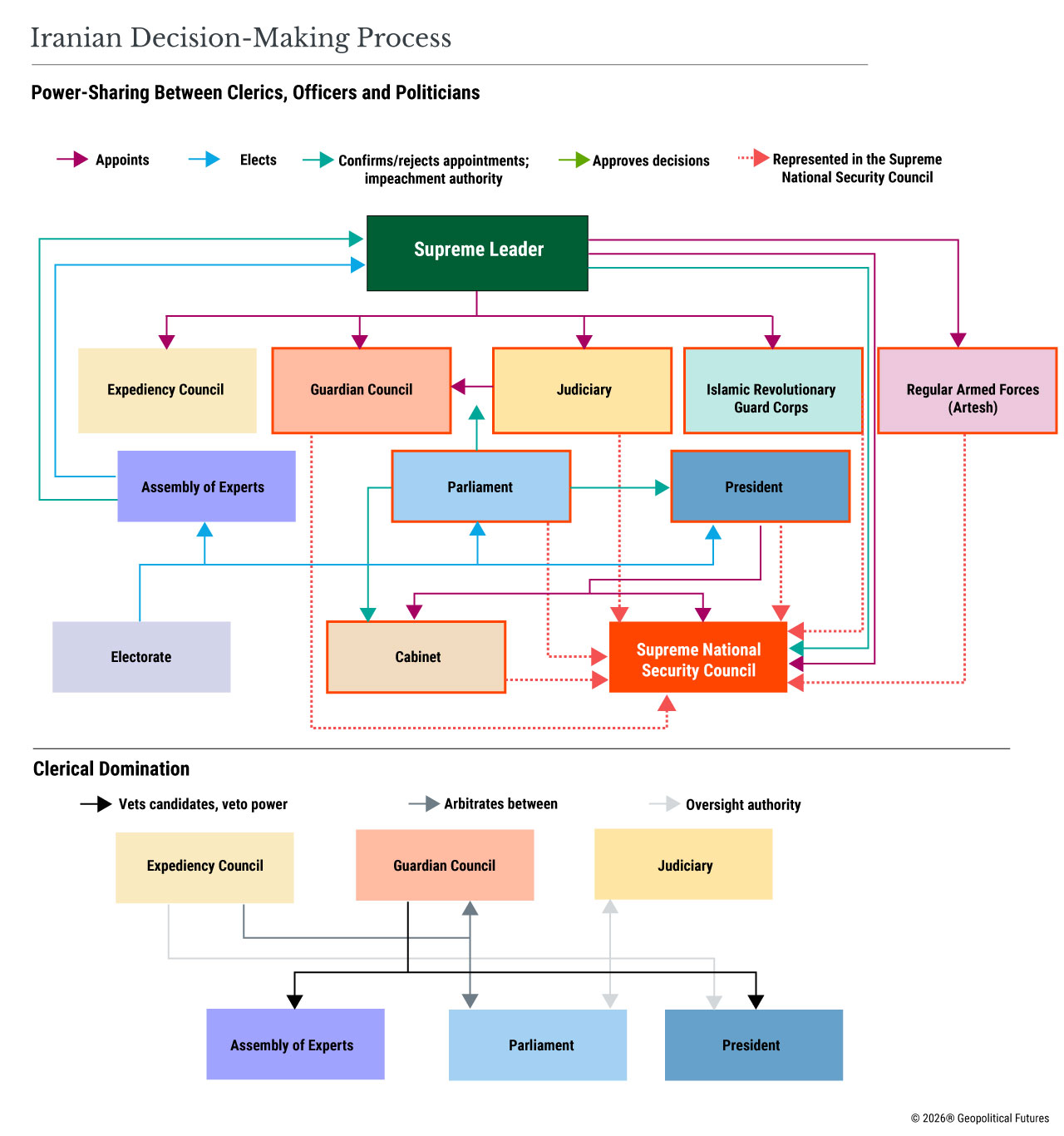
On the political front, Vahidi effectively engineered a quiet coup by exploiting the leadership vacuum that emerged on February 28, the first day of the war. As deputy IRGC chief, he assumed command of the corps following the death of his predecessor, Maj. Gen. Mohammad Pakpour, who was killed alongside the former supreme leader. His first priority was to leverage the succession process by securing the installation of Mojtaba Khamenei as supreme leader over the course of roughly a week. This move displaced prewar expectations that Ayatollah Ali Khomeini, the grandson of the Islamic Republic’s founder, would emerge as the designated successor. The result was a wartime consolidation of authority around a more pliant and severely weakened figure, strengthening the IRGC’s ability to retain decisive influence over the state amid an ongoing conflict.
In some ways, Mojtaba was the obvious choice. He served as de facto chief of staff of his father’s secretariat for years, during which he grew close to the IRGC and senior political clergy. But even if he had not been badly wounded in the airstrike that killed his father, he would have been a weak supreme leader, essentially a puppet in the hands of the IRGC because he does not have the influence that his father did, and he has even poorer clerical credentials. This allows the Vahidi-led IRGC to call the shots, especially now that the younger Khamenei is incapacitated.
Under Vahidi, the IRGC’s central challenge is to maintain the appearance of constitutionalism that sustains the regime’s legitimacy, even as it evolves toward an overtly military-dominated polity. At the same time, the IRGC must navigate a structural vacuum in which both clerical authority and republican institutions are weaker than at any point in the Islamic Republic’s history. Institutional weakening complicates the corps’ ability to govern indirectly while still maintaining the appearance of regime continuity. Managing this tension is essential to the IRGC’s broader imperative of regime stability as it engages the U.S. and maintains a fragile ceasefire.
Ultimately, the outcome of the war will matter less than the political order it leaves behind as Iran enters a prolonged phase of internal reconfiguration under acute structural stress. The erosion of clerical authority and republican institutions has already shifted the center of gravity toward the security establishment, even if its primacy is still being masked by the language and symbols of the old system. Whether the IRGC can parlay wartime primacy into a stable governing framework will depend on its ability to manage internal fragmentation, maintain cohesion among the elite, and avoid overreach that could trigger broader systemic backlash. What emerges in Tehran, therefore, is likely to be neither a clean break nor a simple continuation but a hybrid order in which military power defines the state while legitimacy struggles to keep pace.

 The World Explained in Maps