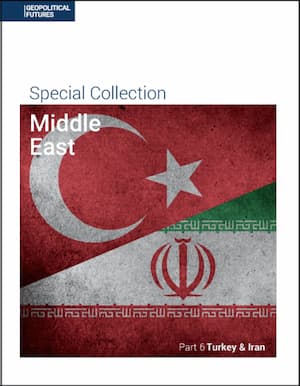

Turkey, Israel and the New US Geostrategy

In Washington’s new framework, Ankara is the core component and Israel is the most exposed actor.

942

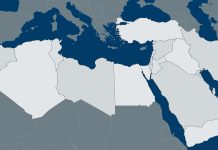
The United States is rolling out its new geostrategy, centered on burden-sharing and burden-shifting, across the globe. The Middle East is its proving ground. Here, Washington strives to achieve a power balance among three main allies with divergent interests – Turkey, Israel and Saudi Arabia – while navigating the rapid decline of Iran, its chief […]

This article is for subscribers only

Join thousands of readers who rely on GPF for clear-eyed geopolitical analysis.

$89 per year Save 18% vs. monthly
Full access to all daily analysis & forecasts
George Friedman's geopolitical insights
2026 Forecast & Special Collection on the Middle East
100% reader-supported
Subscribe Now

30-day money-back guarantee


Already a subscriber? Log in

Kamran Bokhari
Kamran Bokhari, PhD, is a regular contributor to and former senior analyst (2015-2018) with Geopolitical Futures. A strategic forecaster, Dr. Bokhari is now a Senior Resident Fellow with the Middle East Policy Council and a Senior Director at the New Lines Institute for Strategy & Policy in Washington, DC. Bokhari also teaches Eurasian Geopolitics at Georgetown University's Security Studies Program. Previously, has served as the Coordinator for Central Asia Studies at the U.S. Department of State’s Foreign Service Institute. Follow him on X (formerly Twitter) at @Kamran Bokhari