
Pushback in Panama

The limits to which countries accept U.S. pressure isn’t in Washington’s control.

1165

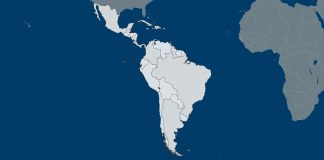
Washington’s strategy to advance U.S. interests in Latin America is inherently vulnerable. Broadly speaking, it uses national security and economic arguments to justify its actions and prefers to work out its differences at the bilateral level. Threats of coercion are baked into the equation. But bilateral talks have graver domestic political implications for Latin American […]

This article is for subscribers only

Join thousands of readers who rely on GPF for clear-eyed geopolitical analysis.

$79 per year Save 27% vs. monthly
Full access to all daily analysis & forecasts
George Friedman's geopolitical insights
2026 Forecast & Special Collection on the Middle East
100% reader-supported
Subscribe Now

30-day money-back guarantee


Already a subscriber? Log in

Allison Fedirka
Allison Fedirka is the director of analysis for Geopolitical Futures. In addition to analyzing and writing about global geopolitical issues, she helps train new analysts, oversees the intellectual quality of analyst work and helps guide the forecasting process. Prior to joining Geopolitical Futures, Ms. Fedirka worked for Stratfor as a Latin America specialist and subsequently as the Latin America regional director. She lived in South America – primarily Argentina and Brazil – for more than seven years and, in addition to English, fluently speaks Spanish and Portuguese. Ms. Fedirka has a bachelor’s degree in Spanish and international studies from Washington University in St. Louis and a master’s degree in international relations and affairs from the University of Belgrano, Argentina. Her thesis was on Brazil and Angola and south-south cooperation.