

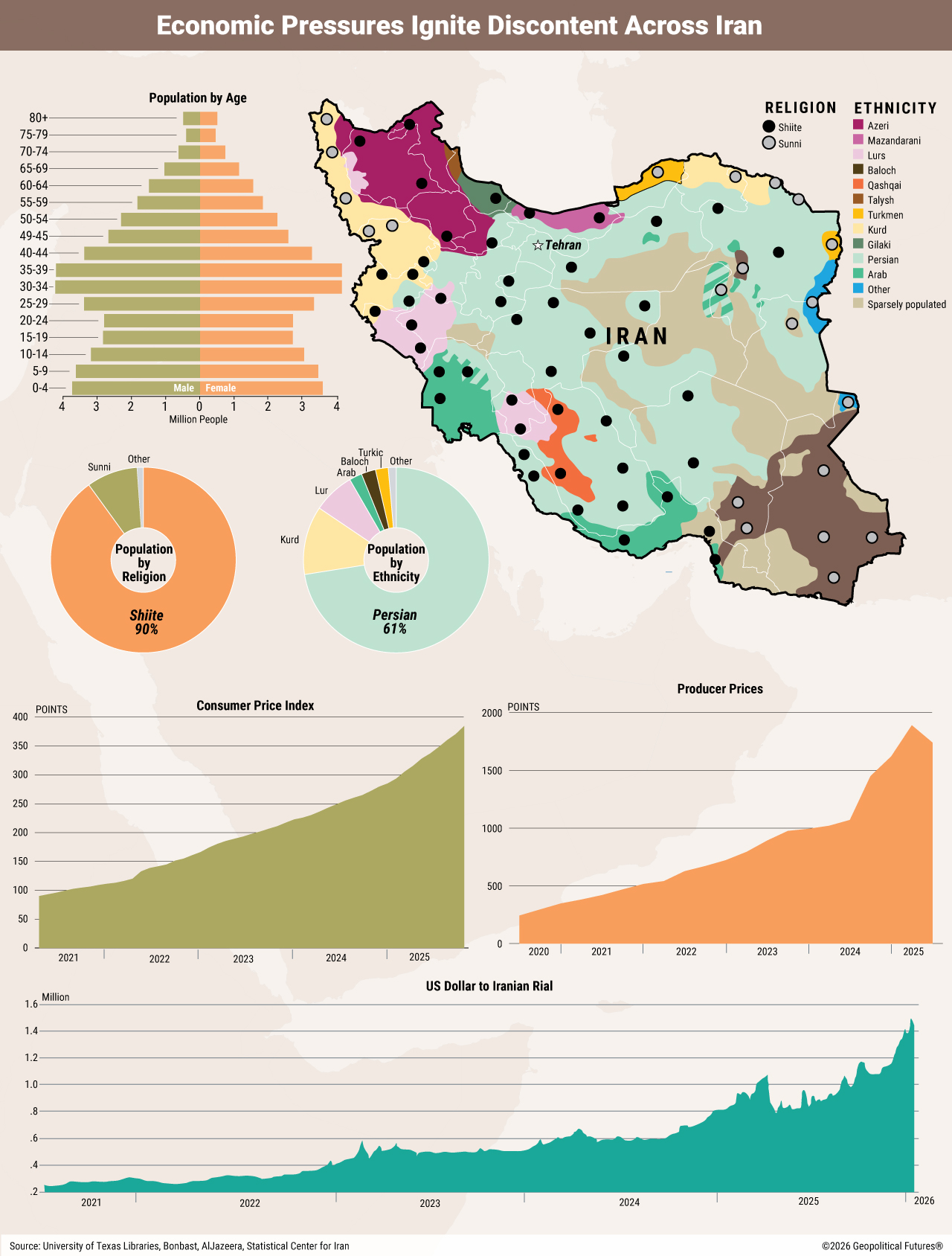
In Iran, a prolonged period of high inflation has combined with a collapse in the value of the rial to produce mass unrest. Rising consumer prices steadily erode daily living standards, while surging producer prices point to deeper strains within Iran’s economy, increasing the risk of job losses and firm closures as input costs rise. By constraining foreign currency access and raising production costs, international sanctions have reinforced these dynamics, limiting the regime’s capacity to absorb economic shocks.
Iran’s demographics add even more complexity. A large share of Iran’s population of 92 million is between the ages of 25 and 44, trying to raise a family and approaching their peak earning years. Instead, these Iranians have faced economic stagnation. Compared with student-driven protest cycles, discontent among this age group can be more difficult to defuse. Moreover, mass discontent can arise unevenly and unpredictably because of Iran’s ethnic and religious diversity.
These factors point to sustained instability. The regime retains control through coercion, particularly in the political center, but economic and demographic pressures suggest that maintaining order will demand more security and fiscal resources over time, reducing the state’s ability to manage economic policy and respond to external challenges.

 The World Explained in Maps