
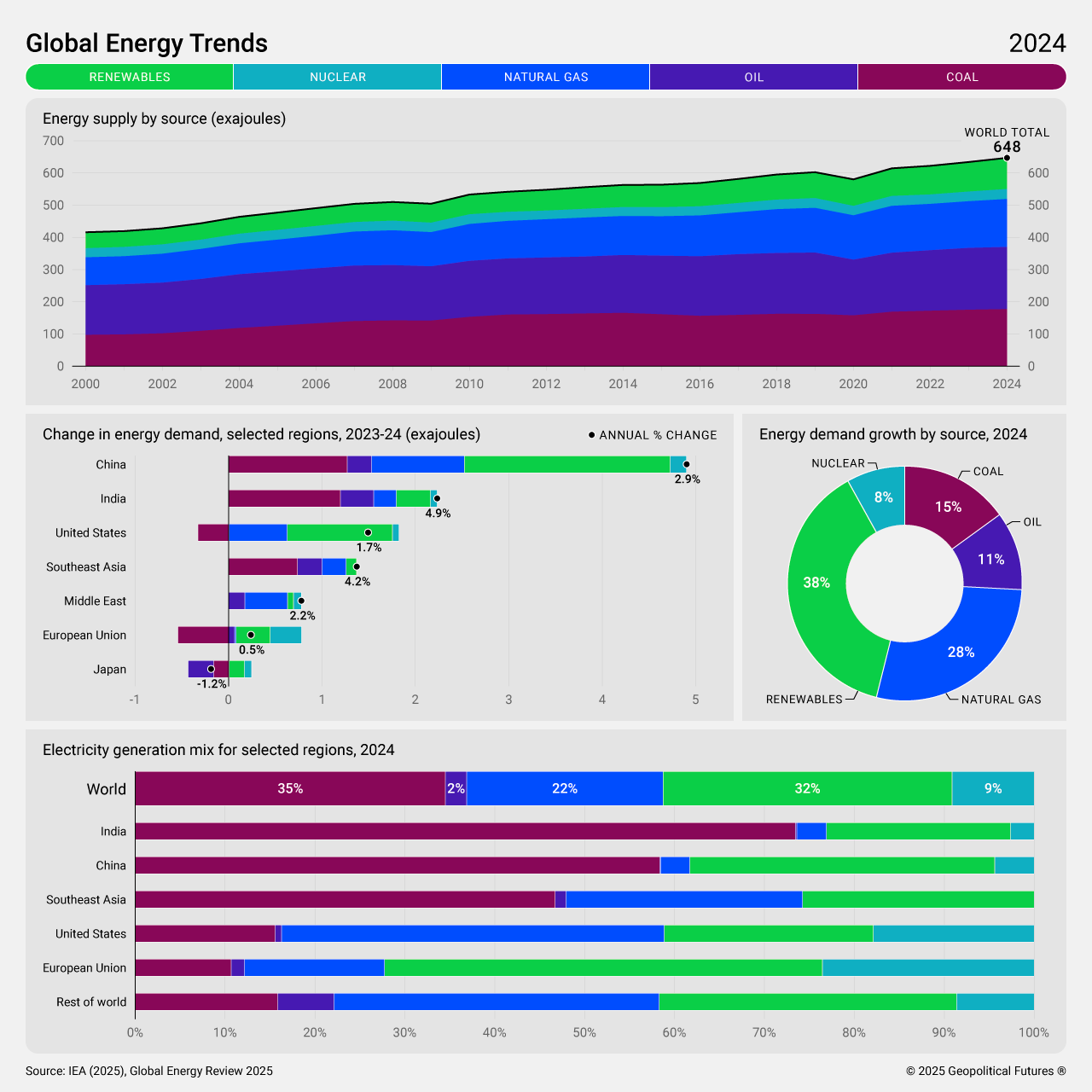
The International Energy Agency released its Global Energy Review last month, revealing notable changes in demand and supplies. In 2024, global demand for energy increased by 2.2 percent – up markedly from the annual average growth rate of 1.3 percent between 2013 and 2023 – driven in part by extreme weather. Electricity demand grew by a record 4.3 percent, which according to the IAE reflects increased access to electricity-intensive appliances like air conditioning, a shift toward electricity-intensive manufacturing and growing power demand from digitalisation, data centers and AI.
Demand for renewable sources increased the most (38 percent), followed by natural gas (28 percent), coal (15 percent), oil (11 percent) and nuclear (8 percent). Emerging markets and developing economies led the overall spike, despite demand growth falling to below 3 percent from almost 4 percent in 2023. Demand also increased in the United States, by 1.7 percent, but fell in Japan by 1.2 percent.