
HomeRegional DirectoryMiddle East and North Africa

Middle East and North Africa

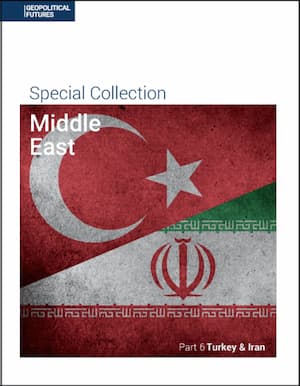
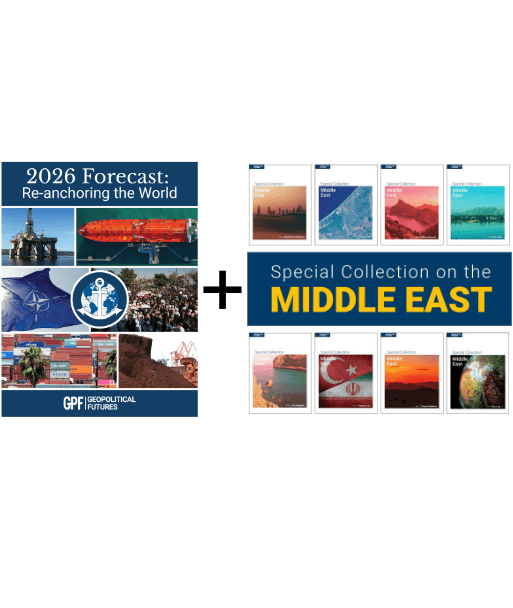
Special Collection on the Middle East

This complete work consists of several dozen essays spread out over 8 parts tackling the region’s conflicts and historical evolution, relating them to contemporary issues. Divided into distinct regions and critical issues, the Special Collection of the Middle East is your source to better understand this volatile region and to be prepared for what comes next.

For Israel and Saudi Arabia, Normalization Is No Longer a Priority

During a meeting at the White House on Nov. 18, U.S. President Donald Trump pressured Saudi Crown Prince Mohammed bin Salman to join the...

The US Snubs the Lebanese Army

The Lebanese army is facing increasing pressure from both the U.S. and Israel to strengthen its efforts to disarm Hezbollah. Its lack of progress...

Saudi Arabia’s Burden-Sharing Test

As the most volatile theater in the international system, the Middle East poses the greatest obstacle to President Donald Trump’s effort to operationalize a...

On the Global Gen Z Protests

Over the past few months, a wave of protests led by members of Generation Z has swept over the world. They have largely taken...

George Answers Your Questions: Russia’s Vast Borders, US Intelligence on Drug Smuggling

Russia’s Issues Beyond Ukraine Nov. 11, 2025 Question: Why do you conclude with the statement that Russia has neither the ability nor interest to act on...

Syria, Gaza and the Shifting Middle Eastern Order

Early this week, U.S. President Donald Trump welcomed Syrian President Ahmed al-Sharaa at the White House, signaling Washington’s intention to recast Syria as the...

The UAE’s Role in the Sudanese Civil War

Sudan is an unviable country because it is home to 570 tribes, 57 ethnic groups and nearly 60 separatist movements. Immediately after its independence...

Why Washington’s Adversaries Must Find Accommodation

China, Russia and Iran have certain geopolitical imperatives they can’t achieve without first reaching some kind of accommodation with the United States. Beijing needs...

The UAE’s Quiet Militarization of the Red Sea

The Rapid Support Forces, a paramilitary group that comprises one side of the civil war in Sudan, recently took el-Fasher, the last important stronghold...

Why Peace by Force Will Not Work in the Middle East

The Gaza ceasefire deal stipulates that a lasting peace is one in which both Palestinians and Israelis can thrive, protect their fundamental human rights,...

Understanding the Enigmatic Houthis

Conventional wisdom has it that Yemen’s Houthi rebels are an Iranian proxy that follows commands from its primary sponsor, Tehran. This perception is far...

The Illusion of Palestinian Statehood

Editor’s note: The Oct. 7 attacks on Israel started a conflict that has progressively drawn more countries into the fray. Nearly two years later,...

The Most Important Point in the Gaza Peace Proposal

In an Sept. 29 joint press briefing at the White House with Israeli Prime Minister Benjamin Netanyahu, U.S. President Donald Trump unveiled a 20-point...

How Cyber Escalation Is Changing Conflict

On Sept. 19-20, coordinated cyberattacks disabled airport check-in systems across Europe, stranding passengers and forcing airports onto manual backups. It was the most visible...

The Saudi-Pakistani Defense Pact and Gaza

As the U.S. reduces its role in the Middle East, Saudi Arabia – encouraged by Washington – is forging a new regional security architecture....

How Drone Logistics Are Changing Warfare

Warfare is the contest between technology and geography. Geography imposes limits (e.g., distance, rivers, mountains, chokepoints) and technology tries to erode them, relying on...

Latest Posts

The meltdown of autocratic regimes currently underway in the Arab world has led to the growth of ungoverned spaces. The resulting vacuum is being dominated by armed Islamist non-state actors – in particular Salafist-jihadist militias.

The three non-Arab powers – Turkey, Iran and Israel – are trying to manage the regional commotion according to their national interests.

It was during the Cold War era that a deep ideological chasm in the Middle East began to coagulate. The struggle between those who adopted European secularism and those who crafted an ideology based on religious tradition had its roots in late 19th century Ottoman Empire. Roughly 100 years later, this struggle had polarized the region.

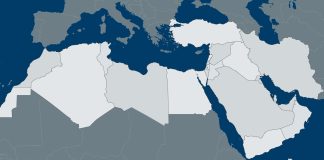
Read Regional Assessment

Read Assessment of Saudi Arabia

Read Assessment of Turkey

Required Reads: Middle East and North Africa

From our Forecast...

The Vienna nuclear talks will result in a settlement. The Israeli Air Force will not attack Iran’s nuclear sites.

Middle East and North Africa in our Memos

Continue to the category

More from the Middle East and North Africa

Continue to the category

Latest Posts

America’s Next Crisis: George Friedman on Immigration, Technology and the Workforce

FREE
In his book, The Storm Before the Calm, Geopolitical Futures chairman and founder George Friedman explained the challenges that low birth rates and longer life expectancy will bring to America. As an aging population causes a shrinking workforce, this deepening demographic crisis could have long-term impacts across the globe. And the solutions come with their own set of challenges. On this episode of Talking Geopolitics, George joins host Christian Smith to break it all down, from the use of immigration to stabilize labor markets, to artificial intelligence and much more.

America’s Next Crisis: George Friedman on Immigration, Technology and the Workforce

FREE
In his book, The Storm Before the Calm, Geopolitical Futures chairman and founder George Friedman explained the challenges that low birth rates and longer life expectancy will bring to America. As an aging population causes a shrinking workforce, this deepening demographic crisis could have long-term impacts across the globe. And the solutions come with their own set of challenges. On this episode of Talking Geopolitics, George joins host Christian Smith to break it all down, from the use of immigration to stabilize labor markets, to artificial intelligence and much more.

Daily Memo: Ukraine’s European Backers Get Weak in the Knees

Paying for it. Italian Foreign Minister Antonio Tajani said it would be “premature” for Rome to participate in NATO’s program to buy U.S. weapons...

Get Geopolitical Futures FREE newsletter

Understanding Our Geopolitical Model

Sign up now and receive our special report Understanding our Geopolitical Model

Get weekly analysis from New York Times bestselling author George Friedman and our global team of analysts, plus special offers.

Cyber Week Special


The Geopolitics of the American President &
The Epilogue to The Storm Before the Calm

FREE with an annual subscription to Geopolitical Futures.

Subscribe Now