
Can ASEAN Still Shape Its Own Destiny?

A bloc built for consensus faces a world defined by rivalry.

651

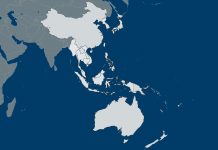
Though the Association of Southeast Asian Nations counts among its members some of the developing world’s most up-and-coming economies, the bloc has never been able to parlay its potential into meaningful strategic influence. There are many reasons for this, including conflicting national imperatives and unresolved internal conflicts. But perhaps the most important is that its […]

This article is for subscribers only

Join thousands of readers who rely on GPF for clear-eyed geopolitical analysis.

$79 per year Save 27% vs. monthly
Full access to all daily analysis & forecasts
George Friedman's geopolitical insights
2026 Forecast & Special Collection on the Middle East
100% reader-supported
Subscribe Now

30-day money-back guarantee


Already a subscriber? Log in

Victoria Herczegh
Viktória Herczegh is an analyst at Geopolitical Futures. She is also a PhD candidate at the Political Science and International Relations Doctoral School of Corvinus University of Budapest, Hungary. Her PhD research topic is "Double Standards projected by Great Powers". Ms. Herczegh holds a bachelor's degree of Chinese Language and Culture and a master's degree of East Asian Studies. She also spent one semester at Shanghai International Studies University studying Mandarin Chinese. Ms. Herczegh is a native Hungarian fluent in English, Spanish, French and Mandarin.