

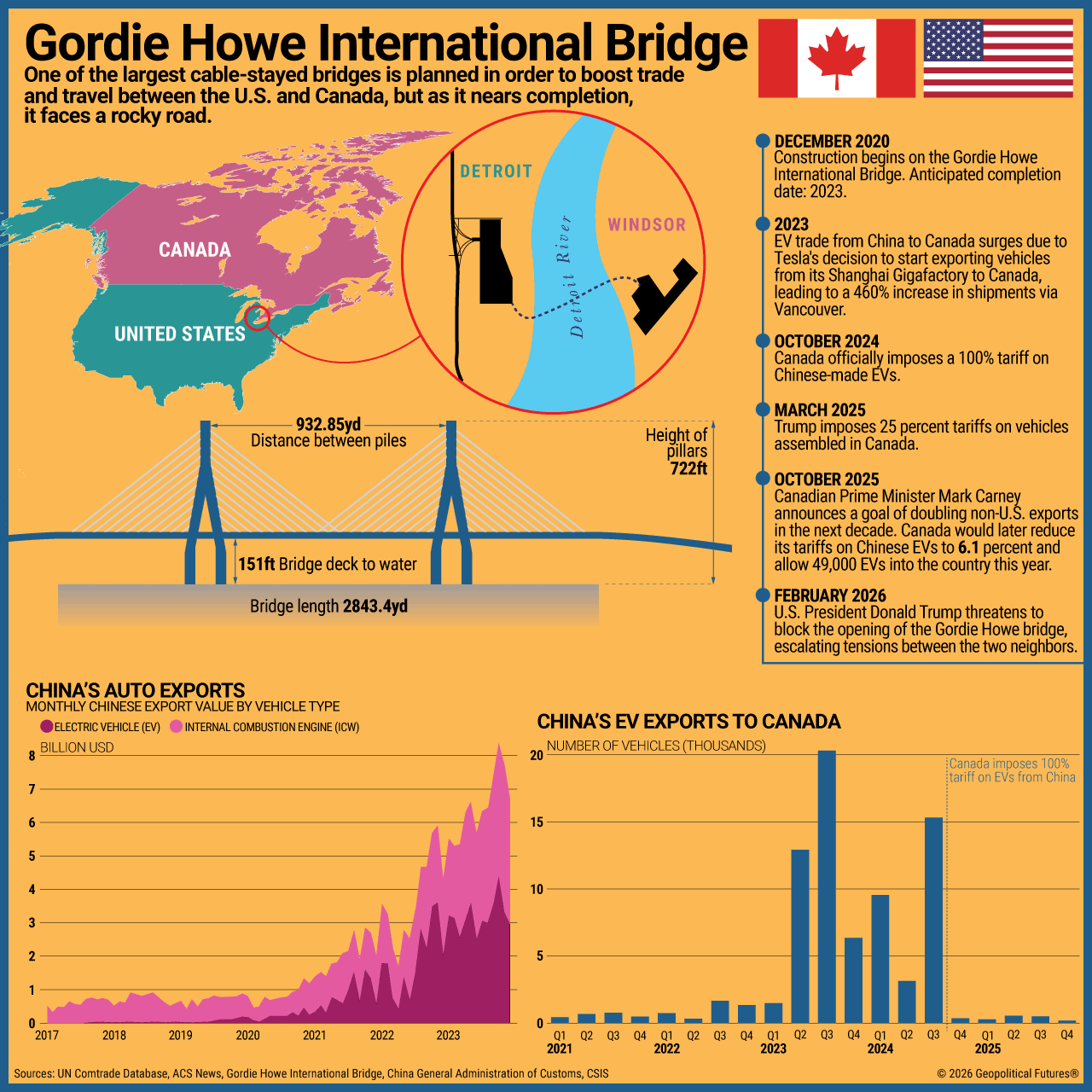
Canada finds itself in a difficult position when it comes to its two largest trading partners, the U.S. and China. Ottawa and Washington are in the middle of negotiating the renewal of the USMCA trade agreement. At the same time, the U.S. continues its trade war with China, a conflict in which Canada has been pitted between the two sides on more than one occasion. For example, Canadian Prime Minister Mark Carney’s visit to Beijing at the end of January resulted in a major EV deal between Canada and China. U.S. President Donald Trump responded by threatening 100 percent tariffs on Canadian goods as well as other measures, like blocking the opening of the Gordie Howe International Bridge.
On one hand, Canada’s trade reliance on the U.S. means it cannot alienate Washington. On the other hand, the country wants to improve its economic conditions by reviving its manufacturing base and diversifying its trade partners. The automotive industry is a natural choice given its size, development and ability to expand to include Japanese, Chinese, South Korean and other investors. Access to U.S. markets, however, will be a major consideration before deploying any capital in Canada.




 The World Explained in Maps