
Last week, the International Maritime Organization submitted a proposal to protect shipping in the Persian Gulf that’s modeled on the Black Sea grain initiative, which helped keep certain supply chains open during the worst of the war in Ukraine. Though there are reports that Iran may be open to working with the IMO, it entered negotiations by sharing a specific red line: that the Strait of Hormuz would be opened only to ships unaffiliated with its enemies – namely, Israel and the United States. Crucially, the proposal does more than offer a technical fix to a wartime disruption; it tacitly acknowledges that conflict in the Middle East, like the Black Sea before it, can reshape regional balances of power as well as international business more broadly.
Structurally, the linkage between the Black Sea and the Strait of Hormuz makes sense. In both cases, the issue is the systemic consequences of disrupted flows. When essential commodities are bottlenecked, pricing, logistics and risk across the global economy are fundamentally altered, and wartime trade corridors are not exceptions but features of an increasingly fragmented and securitized global economic order. The shift began in 2022, when Russian military action effectively cut Ukraine off from global markets via the Black Sea. Effectively a blockade, it marked the first major instance in decades in which war risk became a central variable in global trade rather than a marginal insurance clause.
In 2022, before taking into account any sanctions-related measures, insurers rapidly repriced exposure, causing premiums to surge and signaling a global economic dimension to the war. States and companies alike were forced not only to adapt but also to position themselves within an increasingly polarized environment. The grain initiative illustrated this dynamic: With the United Nations leading negotiations, there was initial hope that, if implemented, it could serve as a platform for broader talks and contribute to deescalation, while reinforcing international law and the principle of freedom of navigation. However, this expectation ultimately did not materialize. The grain initiative was abandoned in 2023, and shipowners and traders had to reassess the viability of entire routes. Ultimately, Black Sea trade had to be adjusted in real time through negotiated corridors and alternative inland routes such as the Danube corridor. This necessarily raised the price of maritime transit.
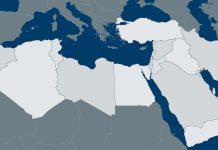
The Black Sea thus became a testing ground for a new normal in which security conditions rather than efficiency dictated the structure of trade flows, setting a precedent now being echoed in the Gulf for insurers, shippers and traders. Both the Bosporus and the Strait of Hormuz are narrow maritime gateways for critical commodities and are thus fixed, structural features of the global economy. The Black Sea channels grain, oil, fertilizers and metals, while the Strait of Hormuz channels the world’s oil, liquified natural gas and petrochemicals. In places like these, war does not simply interrupt trade; it transforms geography itself into a strategic instrument, allowing control over access points to be leveraged for economic and political gain by powers sustaining their interests.
Rather than imposing outright blockades, Russia (in the Black Sea) and Iran (in the Strait of Hormuz) have pursued strategies of controlled disruption, allowing flows to continue under tightly managed and politically conditioned terms. In the Black Sea, exports were funneled through a negotiated corridor under the auspices of the United Nations and Turkey, where inspections, delays and periodic suspensions served as tools of signaling and leverage. Risk fluctuated accordingly. In the Gulf, vessels are being granted selective passage in exchange for payment mediated by actors linked to the Islamic Revolutionary Guard Corps, effectively creating a toll-based system in which access is contingent on political alignment. In both cases, the objective is the political management of circulation.
These dynamics point to the emergence of “wartime governance regimes” wherein established, rules-based frameworks are displaced by improvised and politically contingent arrangements. In the Black Sea, standard principles of maritime law were effectively supplanted by an ad hoc agreement – the grain initiative – brokered under exceptional circumstances to manage risk and maintain limited flows. Later, when Russia had no interest in participating in the grain initiative anymore (it established its own alternative corridor for shipping its exports to global markets), this initiative was shuttered, and NATO countries had to adapt to new circumstances to secure trade routes as Ukrainian ports are still targets for Russian attacks. In the Strait of Hormuz, the informal toll system challenges long-standing norms of freedom of navigation. In both theaters, governance shifts away from neutral, universally applied rules toward context-specific mechanisms shaped by power, negotiation and coercion.
To be sure, it’s common for wartime conditions to reshape commercial patterns. But what’s striking about the two in question is the persistence and the diffusion. Four years after the initial disruption in the Black Sea, many of the adaptations first introduced there remain in place, serving as a template for subsequent crises. This points to a broader normalization of rewritten rules, where exceptional measures become embedded in the functioning of global trade. The emergence of coercive tolling in the Strait of Hormuz exemplifies this shift: If sustained, it sets a precedent that could extend to other chokepoints such as Bab el-Mandeb or even Suez-adjacent routes, raising the risk of a wider erosion of freedom of navigation norms.
Over the longer term, these developments evince a structural transformation of the global economy. The security cost of trade is no longer a temporary shock but a permanent layer embedded in pricing and logistics that companies need to take into account. At the same time, geography itself is being repriced: Certain routes are becoming more expensive and politically conditional, so access is increasingly determined by power rather than neutrality. This is accompanied by an institutional shift away from predictable, rules-based systems toward bargaining-driven arrangements, where bilateral deals and ad hoc mechanisms replace multilateral governance.
Taken together, the Black Sea and Hormuz cases reveal that globalization, while working through the many interdependencies among the world’s economies, is no longer organized primarily around efficiency but around controlled access under geopolitical stress. This is because the global economic war that started in 2022 has entered a new phase that now has explicit and implicit fees for participation.
Iran’s emerging toll system is particularly significant because it transforms sovereignty from a territorial concept into a mechanism of direct, real-time revenue extraction. Russia had already done something similar through its control over port access and its strategic use of energy pricing as leverage, but it never charged anything for access. Iran’s turning control over transit into an immediate financial and political instrument, then, is a bit of an escalation.
It’s not unheard of; it echoes patterns seen, for example, in the Ottoman Empire’s management of key straits, where passage could be restricted, taxed or negotiated depending on the situation. The difference is in scale and systemic impact. Whereas earlier regimes operated within more regionalized economic systems, today’s is applied to globally integrated energy markets. A key consequence of these developments is the permanent elevation of the security cost of trade. What initially appeared as a temporary disruption has instead become embedded in the structure of global commerce: War risk premiums, compliance costs and security-related delays are now a fixed factor in pricing and logistics calculations. This, in turn, drives a broader repricing of geography. Certain routes become structurally more expensive and increasingly subject to political conditions, while alternative corridors gain strategic and commercial value despite longer distances or higher baseline costs. As a result, geography itself is tiered by power, with access, cost and reliability determined by the ability of states to control, secure or manipulate critical transit routes.
In this environment, companies are likely to move beyond passive adaptation and begin actively shaping the security conditions under which they operate. Faced with structurally higher risks and increasingly politicized maritime routes, major commercial actors – particularly in international shipping but also strategic sectors like energy or mining – may seek more direct forms of representation in the governance of the global maritime domain, whether through industry coalitions, closer alignment with naval powers or participation in emerging security frameworks. Meanwhile, firms are likely to develop their own strategies to secure trade flows, ranging from enhanced intelligence capabilities and route diversification to contracted protection services and embedded security partnerships. Over time, this could evolve into a partial privatization of security for trade, especially in regions where state protection is limited, fragmented or unreliable and where companies anticipate future escalation. In such contexts, the boundary between commercial logistics and strategic security may become increasingly blurred.
Ultimately, these developments point to a gradual but profound erosion of the principle of freedom of navigation, long upheld as a cornerstone of the Western-led maritime order. For decades, the dominant model – backed by naval power and embedded in international law – sought to guarantee open sea lanes as global commons, insulated from coercion and transactional control. What is emerging instead runs counter to this logic: Access is no longer assumed but negotiated, priced and conditioned by political alignment.