
South Asia

The Military Benefits of Quantum Technology

Modern militaries increasingly depend on the continuous functioning of complex systems rather than on decisive battlefield victories. Military advantages, then, are created less by...

On the Global Gen Z Protests

Over the past few months, a wave of protests led by members of Generation Z has swept over the world. They have largely taken...

The Taliban Emirate, China, India and Pakistan

After the United States withdrew from Afghanistan in 2021, it was only a matter of time before conflict erupted between the Afghan Taliban and...

Pakistan’s Balancing Act Between the United States and China

Amid the intensifying U.S.-China competition, Pakistan occupies a unique geopolitical position: It is the only country that maintains deep, long-standing relations with both Washington...

The Saudi-Pakistani Defense Pact and Gaza

As the U.S. reduces its role in the Middle East, Saudi Arabia – encouraged by Washington – is forging a new regional security architecture....

How Drone Logistics Are Changing Warfare

Warfare is the contest between technology and geography. Geography imposes limits (e.g., distance, rivers, mountains, chokepoints) and technology tries to erode them, relying on...

Could Turkey and Pakistan Become Israel’s Next Targets?

In 1978, Israel and Egypt signed the Camp David Accords, and a decade later, Jordan relinquished all administrative responsibilities for the West Bank. These...

When Rivers Become Red Lines

Societies have tried to control resources as long as there have been resources to control. Whether precious metals, arable lands or hydrocarbon deposits, access...

Risk and Reward in the AI Arms Race

Artificial intelligence is emerging as the strategic high ground in warfare, promising faster targeting, smarter weapons and operations beyond human capacity. Several imperatives are...

Where India Fits Into New US Strategies

In its 2025 annual forecast, GPF wrote that the world no longer has an anchor around which to organize itself. Nowhere is this better...

India’s Ambitions in Africa

Over the past decade there has been a marked increase in the competition for influence in Africa. China is already well established there, but...

Russia’s Calculated Silence on the India-Pakistan Conflict

Last week, the special assistant to Pakistan’s prime minister arrived in Moscow to discuss his country’s recent military skirmish with India and appeal to...

Pakistan’s Crucial Role in China’s Military Strategy

Had India not conducted unprecedented airstrikes in Pakistan on May 7 – retaliation for a terrorist attack in Kashmir two weeks earlier – Chinese-made...

A New Reality in the India-Pakistan Conflict

India and Pakistan this week became the only nuclear powers to engage in a significant conventional military conflict with one another, but there are...

Red Alert: India Strikes Pakistan

FREE
On May 6, India launched Operation Sindoor in retaliation to the April 22 militant attack on Pahalgam, Jammu and Kashmir, which left 26 civilians...

America’s New Threat Assessment

FREE
(click to enlarge) The 2025 Annual Threat Assessment from the U.S. Intelligence Community presents a detailed overview of a rapidly evolving threat landscape defined by...

Latest Posts

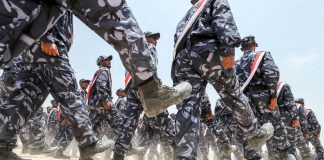
The heartland of South Asia is the Indo-Gangetic Plain, a large and fertile region based around the Indus and Ganges river systems, as well as the Bramaputra in Bangladesh and eastern India.

The center of gravity of South Asia is the balance of power between Pakistan and India. Historically, India has struggled to assert itself within the subcontinent because of its complex internal divisions.

The future of Afghanistan matters to the degree it could weaken Pakistan, thereby tipping the balance of power in India’s favor.

There is an intense rivalry between China and India, but the geography of the region, including the existence of buffer states such as Nepal and Bhutan, typically prevents them from coming to blows.

Read Regional Assessment

Required Reads: South Asia

The Future of India...

India will work to improve ties with Central Asia and strengthen alliances with secondary powers like Japan and Australia.

South Asia in our Memos

Continue to the category

More from South Asia

Continue to the category

Latest Posts

Daily Memo: US Delays China Chip Tariffs, Israel Warns About Threats From West Bank

Tariffs on China. The U.S. announced it will delay tariffs on Chinese semiconductor imports until 2027. A year-long investigation into Chinese trade practices found...

The Military Benefits of Quantum Technology

Modern militaries increasingly depend on the continuous functioning of complex systems rather than on decisive battlefield victories. Military advantages, then, are created less by...

Venezuela, Cuba, and the New Western Hemisphere Strategy

FREE
America's new National Security Strategy reflects a fundamental change in U.S. policy. It prioritizes America maintaining its preeminence in the Western Hemisphere, while avoiding military competition with China as well as European conflicts. At the same time the White House has taken pen to paper on its new policy, military pressure on Venezuela is ramping up as the Trump administration sanctions oil tankers in the region. This week on Talking Geopolitics, GPF Chairman George Friedman joins host Christian Smith to discuss these escalations and what it all has to do with Cuba.

Get Geopolitical Futures FREE newsletter

Understanding Our Geopolitical Model

Sign up now and receive our special report Understanding our Geopolitical Model

Get weekly analysis from New York Times bestselling author George Friedman and our global team of analysts, plus special offers.

Subscription Special


The World Explained in Maps

FREE with an annual subscription to Geopolitical Futures.

Subscribe Now